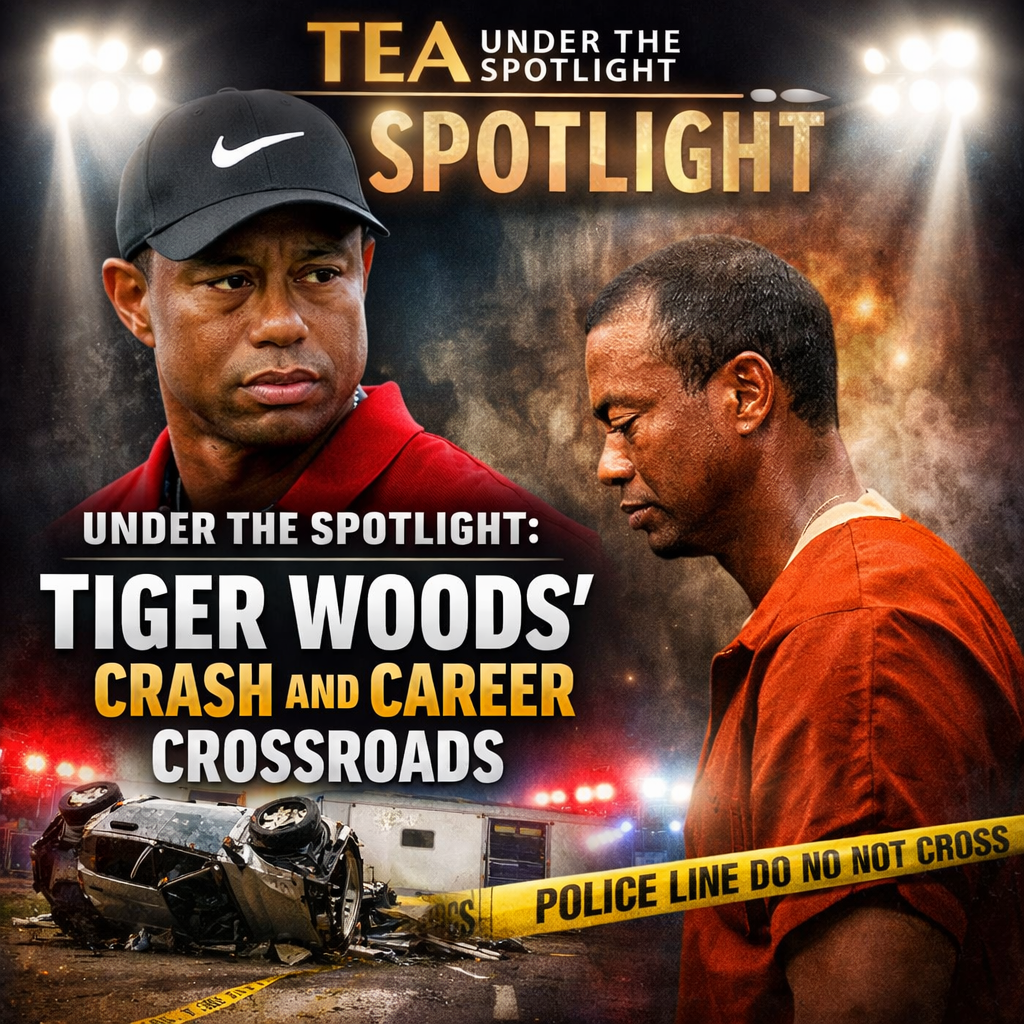
Episode Transcript
[00:00:00] Speaker A: I want you to picture the scene for a second. It is. It's just before 2.0pm on a Friday, March 27, 2026.
[00:00:08] Speaker B: Okay.
[00:00:08] Speaker A: You're driving down the 280 block of South Beach Road. This is in Hobie Sound, Florida, right on Jupiter Island.
[00:00:15] Speaker B: Oh, wow. Yeah. That is a highly affluent, fiercely quiet area.
[00:00:20] Speaker A: Exactly. It's this two lane residential street. The speed limit is a strict, heavily monitored 30 miles per hour. The air is thick with, you know, standard Florida afternoon humidity. The whole neighborhood is just hushed. It's flanked by this really dense, manicured greenery. And up ahead, navigating this narrow little corridor, is a large pressure cleaner truck.
[00:00:41] Speaker B: Like a heavy duty commercial rig.
[00:00:43] Speaker A: Yeah, exactly, a commercial vehicle. And it's pulling this cumbersome, really unwieldy trailer behind it.
[00:00:48] Speaker B: Okay, so that's taking up a lot of space.
[00:00:49] Speaker A: A ton of space. And the truck begins to decelerate. The driver's preparing to to execute a turn into a private drive.
And then that manufactured silence of Jupiter island just completely shatters. A Land Rover approaches really rapidly from the rear, initiating a high speed overtake maneuver.
[00:01:06] Speaker B: Wow. On a residential road.
[00:01:08] Speaker A: Yeah. And the driver of the pressure cleaner truck, he catches the motion in his side mirrors. He sees this SUV closing the distance way too fast. And he tries desperately to edge his heavy rig off the asphalt, you know, to yield some space to get out of the way. Right. But the geography of the road totally betrays them both because there is absolutely no shoulder that at all. None. The asphalt simply terminates straight into grass and landscaping.
So the Land Rover swerves at the absolute last microsecond to avoid a dead on collision. But the space is just run out.
[00:01:40] Speaker B: It's gone.
[00:01:41] Speaker A: The vehicle clips the rear corner of the pressure cleaner's trailer. And then, I mean, the physics just take over instantly. The impact acts as this massive lever, throwing the luxury SUV violently off its center of gravity.
[00:01:53] Speaker B: That is terrifying.
[00:01:54] Speaker A: It is. It rolls, it slams down onto its driver's side. Sparks rain out it. You have this agonizing screech of tearing metal as the Land Rover slides laterally down the abrasive asphalt for what witnesses describe as a quote, pretty decent space, right? And then it finally grinds to a dead halt. And a beat of terrifying suspended silence follows.
[00:02:15] Speaker B: I can only imagine.
[00:02:16] Speaker A: And then movement.
A man begins to slowly pull himself upward against gravity, climbing out of that upward facing passenger door, dragging himself from the wreckage.
[00:02:26] Speaker B: Unbelievable.
[00:02:26] Speaker A: And that man is 15 time major champion to Tiger Woods.
[00:02:30] Speaker B: Honestly, just surviving the blunt force trauma of a Lateral slide and a rollover crash of that magnitude. It's astounding.
[00:02:38] Speaker A: It really is.
[00:02:39] Speaker B: Because when a heavy vehicle loses its horizontal footing and goes down on its side like that, the kinetic energy transferred into the cabin is just immense. Yet as the dust literally settles on South Beach Road, the physical survival of the driver becomes basically just the prologue to a profoundly complicated sequence of events.
[00:02:59] Speaker A: Right, which is exactly why we were doing this deep dive today. Welcome, everyone. We have a massive stack of source material in front of us today. We're talking breaking news reports, verbatim statements from local Florida police and deep dive analysis from the Gulf Media regarding this March 2026 rollover crash and the subsequent DUI arrest. Yeah. Yes, exactly. And to you listening, our mission today is to go far beyond just the sports sticker. We are going to meticulously unpack the anatomical physics of the crash itself.
[00:03:29] Speaker B: Fascinating.
[00:03:29] Speaker A: They really are. And we'll decode the highly calculated legal chess match that occurred right there at the arrest scene. We have to examine the compounding chronic physical toll on a 50 year old athlete's body.
And finally, we're going to project the massive scheduling and corporate leadership shockwaves this single Friday afternoon is sending through the entire future of professional. Professional golf.
[00:03:53] Speaker B: It's a lot to cover.
[00:03:54] Speaker A: It is. Okay, let's unpack this. We have to start with the specific geometry of South Beach Road because like we mentioned, the physical environment totally dictated the inevitability of this collision.
[00:04:03] Speaker B: Absolutely.
[00:04:04] Speaker A: Martin County Sheriff John Budencick made a real point to highlight that this is a two lane road with absolutely zero shoulder.
[00:04:11] Speaker B: Yeah. And the absence of a shoulder changes the entire mathematical equation of driving. I mean, in traffic engineering, a shoulder isn't just a place to park if you have a flat tire.
[00:04:20] Speaker A: Right. It's not just a convenient.
[00:04:21] Speaker B: No, it is a critical safety valve.
It's an engineered margin of error that's literally designed to absorb human mistakes.
[00:04:28] Speaker A: Wow, that makes sense.
[00:04:30] Speaker B: And authorities noted woods attempted to pass at high speeds while the exact miles per hour remains undetermined. You know, we don't have the black box data yet. Any velocity significantly exceeding that 30 mile per hour limit drastically reduces your reaction time.
[00:04:46] Speaker A: Right.
[00:04:47] Speaker B: So the truck driver actively tried to utilize a safety valve that. That simply did not exist.
[00:04:52] Speaker A: It's like driving on that kind of shoulderless residential road is basically like walking a tightrope without a net. Yeah. The margin for error is absolute zero.
[00:05:01] Speaker B: That's a great way to put it.
[00:05:02] Speaker A: Or like water moving through a. Right. The volume is completely fixed. The Moment you introduce a slow moving boulder, in this case the pressure cleaner truck with its trailer, and then a fast moving current trying to squeeze past it. While the pressure has to go somewhere in fluid dynamics, a. A pipe bursts. In automotive physics, on a narrow road, a car rolls. Two objects simply cannot occupy the same constrained space.
When the truck driver tried to bail out to the right and Wood swerved, the math just broke down.
[00:05:34] Speaker B: And that breakdown resulted in a very specific point of impact. You know, the Land Rover didn't rear end the trailer squarely, right?
[00:05:40] Speaker A: It clipped it.
[00:05:41] Speaker B: Yes, it clipped the corner.
And when a high profile heavy vehicle like a luxury SUV clips a stationary or slow moving object at an angle, the trailer basically acts as a fulcrum.
[00:05:52] Speaker A: Oh, wow.
[00:05:52] Speaker B: Okay, so the SUV's forward momentum is abruptly halted on just one side, which violently shifts its high center of gravity. The passenger side wheels lift, rotational force takes over, and the vehicle is essentially tripped onto its driver's side.
[00:06:06] Speaker A: Just tipped right over.
[00:06:07] Speaker B: Right. And the sliding that follows is just the dissipation of that excess kinetic energy through friction against the asphalt.
[00:06:13] Speaker A: Which leaves us with the insanely intense physical aftermath. I mean, the car is resting on its driver's door. Woods is trapped inside, suspended sideways. He has to fight gravity just to push the heavy passenger door upward and climb out.
And miraculously, the sources confirm neither woods nor the driver of the commercial truck
[00:06:32] Speaker B: suffered any injuries, which is incredible. But you know the engineering of modern luxury SUVs, side curtain airbags, reinforced steel cages, that undoubtedly mitigated the physical damage here for sure. But avoiding blunt force trauma was really merely the conclusion of the physical event, because the moment he steps onto the pavement, the situation transitions into a rigorous legal and medical assessment.
[00:06:55] Speaker A: Right, because Jupiter island police and Martin County Sheriff's deputies are on the scene almost immediately.
[00:07:01] Speaker B: Yeah, they respond fast.
[00:07:02] Speaker A: And Sheriff Budencik provided a very specific clinical observation to the press. He noted that woods was, quote, lethargic on the scene. Yes, and I want to pause on that word lethargic, because that isn't just some throwaway adjective for a law enforcement official giving a press briefing, right?
[00:07:19] Speaker B: No, not at all.
[00:07:20] Speaker A: It paints a clinical picture of someone whose central nervous system appears actively depressed. Someone who isn't just rattled by the adrenaline dump of a crash.
[00:07:29] Speaker B: Exactly. Law enforcement officers, particularly those trained in DUI interdiction, they are actively looking for distinct physiological markers.
Lethargy, you know, sluggish movements, delayed verbal responses, drooping eyelids. That is a primary indicator.
[00:07:46] Speaker A: Okay.
[00:07:47] Speaker B: And because of these observed behaviors, deputies initiated an in depth Roadside investigation. They asked woods to perform standard field sobriety tests.
[00:07:56] Speaker A: The walk and turn, that kind of stuff.
[00:07:58] Speaker B: Right. And according to the sheriff's explicit statements, woods failed them.
[00:08:02] Speaker A: Wow.
[00:08:03] Speaker B: In any standard roadside protocol, when you have an erratic driving pattern culminating in a crash or followed by lethargy and failed physical coordination tests, the immediate hypothesis is alcohol intoxication makes sense. So consequently, they administer a Breathalyzer test.
[00:08:17] Speaker A: Wait. Okay, this is where I have to play the skeptic for a second, because the sequence feels like a massive leap to me. If I'm a deputy on a chaotic crash scene, my adrenaline is pumping. I'm looking at a driver who is lethargic, swerving, crashing, and failing to walk a straight line or balance.
I give him a Breathalyzer, fully expecting it to light up, and he blows a flat 0.0.
[00:08:40] Speaker B: Right.
[00:08:40] Speaker A: My very first instinct in that high stress moment is going to be that my Breathalyzer machine is broken. I mean, how do they actually make the cognitive leap in real time to instantly pivot a criminal investigation completely away from alcohol?
[00:08:54] Speaker B: That is exactly the moment standard patrol procedure shifts into specialized drug recognition protocol. Okay, you are correct that a 0.0 result creates a profound cognitive dissonance on the surface. But a trained investigator knows that if the Breathalyzer is functioning correctly, and they do calibrate and test these devices rigorously, then a 0.0, combined with severe impairment, points a massive flashing arrow toward pharmacology.
[00:09:17] Speaker A: Ah, I see.
[00:09:18] Speaker B: They immediately pivot from ethanol to illicit or prescription substances.
The biological reality is that central nervous system depressants, like certain classes of prescription painkillers, muscle relaxants, or sleep aids, they bind to receptors in the brain in ways that can perfectly mimic extreme alcohol intoxication.
[00:09:37] Speaker A: So it looks exactly the same to the cops?
[00:09:39] Speaker B: Exactly. They depress the motor cortex, causing the exact same slurred speech, loss of balance and lethargy.
[00:09:46] Speaker A: Well, the sources actually mention that right there on the shoulder of the road amidst the wreckage. Woods actually explained his extensive history of injuries and surgeries to the deputies, which
[00:09:55] Speaker B: is really important context.
He was providing a physical explanation for his lack of coordination. And Sheriff Boonsek stated on the record that the deputies took those injuries into account.
[00:10:06] Speaker A: Right.
[00:10:06] Speaker B: This is a crucial detail for you, the listener, to understand.
Field sobriety tests, like the walk and turn or the one leg stand, they are designed for able bodied individuals. Obviously, if a suspect has a surgically reconstructed leg and a fused spine, their baseline performance is inherently compromised, sober or not.
[00:10:24] Speaker A: Oh, absolutely.
[00:10:25] Speaker B: A defensive attorney will immediately argue that failing a Physical test is symptom of orthopedic trauma, not chemical impairment.
[00:10:33] Speaker A: But despite taking those injuries into account, the deputies still put him in handcuffs. I mean, the overall presentation, the specific type of lethargy, the totality of the circumstances surrounding the crash, it clearly crossed their legal threshold for probable cause.
[00:10:47] Speaker B: Yeah, the clinical presentation of impairment was overwhelming enough to override that orthopedic baseline.
So they execute the arrest for driving under the influence, but at this point, they only have circumstantial behavioral evidence and a negative alcohol reading.
[00:11:03] Speaker A: Right, which isn't enough for a rock solid conviction.
[00:11:05] Speaker B: No, they need concrete biology. So they transport him to the Martin County Jail, and the investigation enters its most critical phase. They formally request a urine test.
[00:11:14] Speaker A: And here we hit the absolute fulcrum of this entire legal saga. They need the urinalysis to run a toxicology screen, basically to name the exact chemical compound causing the. Left.
And woods flatly refuses to provide the sample. Yeah, and in Florida, under the implied consent laws, refusing a lawful test of your breath, blood or urine after a lawful DUI arrest is a distinct criminal act. It is a standalone misdemeanor. Okay, so now authorities hit him with three dui, property damage for clipping the trailer and refusal to submit to a lawful test.
[00:11:49] Speaker B: You know what's fascinating here is the sheer paradox of his cognitive state in that moment.
[00:11:54] Speaker A: What do you mean?
[00:11:55] Speaker B: Well, on the asphalt of South Beach Road, he is documented by trained observers as, quote, lethargic, physically compromised, and impaired enough to fail basic coordination tasks.
[00:12:06] Speaker A: Right.
[00:12:07] Speaker B: Yet a short time later, sitting in the sterile environment of the county jail, he demonstrates a highly lucid, calculated presence of mind.
[00:12:14] Speaker A: Oh, wow.
[00:12:14] Speaker B: He navigates a complex legal calculus in real time and strategically invokes his right to refuse the test.
[00:12:21] Speaker A: Let's really break down the mechanics of that strategy, because by refusing the urine test, woods is looking at a guaranteed automatic misdemeanor charge. He is essentially raising his hand and saying, I will take the penalty for saying no. But why?
Because he understands that providing that little plastic cup of urine yields an undeniable, scientifically stamped printout of exactly what molecules are flowing through his system.
[00:12:45] Speaker B: Precisely. He is severing the evidentiary chain. In DUI defense, subjective evidence is always vulnerable to attack.
[00:12:53] Speaker A: Right, because it's just one person's opinion.
[00:12:55] Speaker B: Exactly. A defense attorney can cross examine a deputy on the stand and completely dismantle behavioral observations. They can argue the deputies misinterpreted exhaustion or chronic pain as intoxication. They can scrutinize body cam footage and say, look, the Suspect was just shaken up by a violent rollover.
[00:13:12] Speaker A: Which is a very fair argument.
[00:13:13] Speaker B: It is. But a defense attorney cannot cross examine a gas chromatography mass spectrometry machine.
[00:13:19] Speaker A: Right.
[00:13:20] Speaker B: If a lab report shows a specific nanogram count of a powerful narcotic or muscle relaxant in the urine, the defense is obliterated.
[00:13:27] Speaker A: It's an incredibly calculated tradeoff. Absorb a lesser misdemeanor to starve the prosecution of their silver bullet for the primary charge.
[00:13:34] Speaker B: Yeah, that's exactly.
[00:13:35] Speaker A: Because without the toxicology report, prosecuting a drug related DUI becomes an uphill battle, relying entirely on the officer's narrative and whatever the dashcam caught.
[00:13:45] Speaker B: And we must underscore Sheriff Boudenseek's definitive conclusion on this tactic because it confirms the success of Woods's maneuver. The sheriff publicly stated, quote, we will never get definitive results as to what he was impaired on at the time of the crash.
[00:14:00] Speaker A: Wow.
[00:14:01] Speaker B: That door is permanently sealed. Furthermore, the official sources explicitly confirm that investigators found absolutely zero drugs or medication inside the wrecked Land Rover itself.
[00:14:11] Speaker A: None. Like no pills in the center console, no bottles in the glove box, the physical evidence of a SU Substances literally non existent. The urine test was their only shot. And he shut it down.
[00:14:21] Speaker B: Right. Leaving the narrative of his impairment entirely speculative. Oh, but invoking that refusal comes with immediate, non negotiable procedural consequences.
[00:14:30] Speaker A: Oh, yeah.
[00:14:31] Speaker B: Wood's decision dictated the reality of his next several hours, forcing him deep into the rigid machinery of the Florida penal system.
[00:14:38] Speaker A: Because Florida law is incredibly unforgiving on this front. If you are arrested for dui, you cannot simply post bail and walk out
[00:14:47] Speaker B: an hour later, no matter who you are.
[00:14:48] Speaker A: Exactly. No matter how famous your lawyer is or how high your credit limit goes, the state mandates a mandatory eight hour hold in jail.
[00:14:56] Speaker B: Eight hours?
[00:14:57] Speaker A: Yeah. And the physiological logic there is that the state must ensure the suspect has adequately metabolized whatever substance is in their system so they are no longer a danger to the public upon release.
So woods was booked, processed, and locked in a holding cell until the early hours of Saturday morning.
[00:15:14] Speaker B: And this specific eight detention window offers a really revealing look into the complex philosophy of local law enforcement when they suddenly find themselves holding a global icon.
[00:15:24] Speaker A: Right. It's not an everyday occurrence for them.
[00:15:26] Speaker B: No, it's not. Sheriff Boudin Zeek was resolute in his public posture. The law is blind. The mandatory hold applies to everyone, regardless of tax bracket or celebrity status. However, simultaneously, the sheriff took extraordinary, deliberate steps to protect woods by keeping him completely segregated from the general jail population.
[00:15:46] Speaker A: It really Exposes a massive, almost contradictory burden placed on local police in these hyper rare scenarios.
[00:15:53] Speaker B: How so?
[00:15:53] Speaker A: Think about it. Out on Jupiter island, the deputy's primary sworn duty is to protect the public from a driver operating a 2 ton vehicle erratically. True, but the absolute second those jail doors slam shut, the liability completely inverts.
Now the sheriff's department must fiercely protect the suspect from the public, or more specifically, from the other individuals locked inside that facility.
[00:16:19] Speaker B: Right, because you cannot throw a billionaire, globally recognized athlete into a crowded local holding cell on a Friday night.
[00:16:26] Speaker A: Exactly.
Butensica encapsulated this inversion of responsibility perfectly. He stated, quote, he'll pay the price, but he's not going to pay the price by getting punished in jail. Yep, he deeply understood the acute vulnerability of his prisoner.
Placing someone of woods profile into general population isn't just a physical safety risk. It is a catastrophic liability nightmare for the county.
[00:16:48] Speaker B: Oh, absolutely. You have the risk of physical altercation, sure, but perhaps more likely the risk of extortion. Other inmates could try to provoke him, photograph him if they have contraband, or just manufacture a story to sell to the tabloids.
Segregation was literally the only viable administrative option.
[00:17:06] Speaker A: So Wood spends those eight mandatory hours isolated in a segregated cell. And as the clock slowly ticks toward Saturday morning, while he sits with the adrenaline fading and the reality of the crashed Land Rover sinking in, the global sports media apparatus is already moving at light speed.
[00:17:22] Speaker B: They don't waste any time.
[00:17:23] Speaker A: No, they aren't just reporting the facts of Friday afternoon. They are immediately contextualizing it. They are connecting the single rollover to a sprawling, deeply troubling decade long pattern of vehicular incidents.
[00:17:36] Speaker B: Yeah, because assessing this 2026 crash in total isolation ignores the most critical data points of his public life. The source material draws a very stark, unavoidable timeline.
[00:17:46] Speaker A: Right.
[00:17:46] Speaker B: This is now the fourth highly publicized severe car related incident involving woods since 2009. The pattern begins in November 2009 with the infamous early morning crash where his SUV struck a fire hydrant and a tree just outside his Florida home, which resulted in a citation for careless driving.
[00:18:05] Speaker A: And then fast forward eight years to May 2017, another Florida incident, this time in Jupiter. Police find woods asleep at the wheel of his vehicle. The engine is still running.
[00:18:14] Speaker B: Right.
[00:18:15] Speaker A: The car has sustained significant damage to the driver's side. He is arrested and he eventually pleads guilty to a lesser charge of reckless driving.
[00:18:23] Speaker B: The 2017 incident is probably the most critical precedent for understanding the 2026 crash. In 2017, just like today, alcohol was completely ruled out. As a factor.
[00:18:33] Speaker A: Oh, that's right, yeah.
[00:18:34] Speaker B: Following that arrest, woods issued a public statement attributing his condition to an unexpected reaction to prescribed medications, specifically detailing a bad mixture of painkillers he was taking to manage his ongoing physical issues.
[00:18:47] Speaker A: And then the darkest chapter of the timeline. February 2021, Los Angeles.
His luxury SUV crosses the median of a winding coastal downhill road. At excessive speeds, the vehicle careens off the asphalt, rolls violently multiple times and comes to rest in the brush. And the medical descriptions provided in the sources regarding his injuries are just chilling. He suffered comminuted open fractures in his right tibia and fibula.
[00:19:16] Speaker B: Let's clarify the medical terminology for the listener here because it really underscores the severity of his physical reality.
[00:19:21] Speaker A: Please do.
[00:19:22] Speaker B: Commuted means the bones didn't just break cleanly. They splintered and shattered into multiple fragments.
[00:19:28] Speaker A: Oh, man, that's brutal.
[00:19:29] Speaker B: And open. Means those jagged bone fragments violently pierce through the skin and muscle tissue, exposing them to the air and creating a massive risk of infection. Orthopedic surgeons had to insert a solid titanium rod straight down the center of his tibia to stabilize the leg alongside screws and pins in his foot and ankle. Woods himself later admitted that the trauma was so catastrophic that amputation of his right leg was a legitimate medical consideration on the operating table.
[00:19:55] Speaker A: If we lay these incidents out end to end, the through line is devastating. The timeline of his vehicular crashes is a dark, distorted reflection of his timeline of physical deterioration.
[00:20:06] Speaker B: Right.
[00:20:07] Speaker A: We have to examine the precise physical condition woods was in the week he decided to get behind the wheel of that Land Rover on South Beach Road. I mean, we are Talking about a 50 year old man whose body has been treated like a combat zone.
[00:20:19] Speaker B: If we connect this to the bigger picture, the reliance on prescription medication detailed in 2017 is inextricably linked to the physical devastation he suffered in 2021, which in turn leads directly to his state in 2026.
[00:20:33] Speaker A: That's a chain reaction.
[00:20:35] Speaker B: Exactly. The sources detail a staggering recent medical history. He has not competed in an official sanctioned golf tournament since the British Open in the summer of 2024.
[00:20:44] Speaker A: Wow. That long?
[00:20:45] Speaker B: Yeah. And the reason? In March of 2025, his body betrayed him again. He suffered a ruptured Achilles tendon, immediately wiping out any hope of playing that season.
[00:20:54] Speaker A: The Achilles alone is a career ender for most 50 year old athletes.
[00:20:58] Speaker B: Oh, for sure.
[00:20:59] Speaker A: I mean, it is the thickest tendon in the human body. The literal anchor of explosive movement in a golf swing. Snapping it requires an excruciating recovery process.
[00:21:08] Speaker B: Yet the Achilles rupture was merely a preamble. Six months later, while supposedly rehabilitating the leg, he's forced back onto the operating table. In September 2025, woods undergoes back surgery.
[00:21:22] Speaker A: Right?
[00:21:22] Speaker B: And this is the vital data point. It is his seventh back surgery.
[00:21:26] Speaker A: 7. I really want you, the listener, to just stop and visualize the sheer relentless, almost terrifying mental endurance required to live this reality.
[00:21:35] Speaker B: It's hard to fathom.
[00:21:36] Speaker A: Seven surgical interventions on your spine, microdiscectomies, fusions navigating nerve damage, a ruptured Achilles, a right leg that is essentially a titanium scaffolding after a crash that nearly cost him the limb. And yet, after every single catastrophic trauma, he subjects himself to the grueling, monotonous agony of physical rehab simply to try and mount one more professional golf comeback.
At what point does the mind's singular obsessive desire to compete entirely detach from the crumbling physical reality of the body it inhabits?
[00:22:08] Speaker B: It becomes a profound question of identity.
If he stops the rehab, if he accepts the physical limitations, who does he become?
[00:22:15] Speaker A: Right.
[00:22:16] Speaker B: The desire to compete is his operating system.
But the chronic pain is a constant, inescapable gravity.
[00:22:23] Speaker A: Wow.
[00:22:23] Speaker B: The fact that he was standing on the side of that residential road, having just crawled from a flipped SUV, and his immediate instinct was to explain his injuries and surgeries to the deputies, speaks volumes.
[00:22:35] Speaker A: It really does.
[00:22:36] Speaker B: His physical trauma is the dominant lens through which he experiences the world. It is the necessary context for his every single movement.
[00:22:43] Speaker A: And the tragic irony is that his body couldn't even handle real golf the week of the crash.
[00:22:47] Speaker B: What was he doing?
[00:22:48] Speaker A: The sources point out that his only recent competitive action wasn't on the manicured grass of a PGA Tour venue. It was playing in his indoor virtual TGL simulator league. On Tuesday night, a mere three days before he flipped the Land Rover.
[00:23:03] Speaker B: Just simulator golf, right?
[00:23:05] Speaker A: He is reduced to hitting golf balls into a digital projection screen because the physical toll of Simply walking a 7,000 yard course is too much for his reconstructed anatomy to bear.
[00:23:15] Speaker B: But here is the massive contradiction at the center of this story. Despite this profound physical devastation, despite being confined to simulator golf, Tiger woods was not quietly fading into retirement.
[00:23:27] Speaker A: Not at all.
[00:23:28] Speaker B: He was actively, aggressively wielding his influence to shape his own upcoming competitive schedule. And far more importantly, attempting to steer the entire macroeconomic landscape of professional golf.
[00:23:39] Speaker A: Right?
[00:23:40] Speaker B: These are monumental plans that have now been violently derailed by a split second decision to pass a pressure cleaner truck.
[00:23:46] Speaker A: The ripple effects of this arrest are hitting the highest echelons of the golf world. Like a sledgehammer. Entirely because the specific timing.
[00:23:53] Speaker B: The timing is incredible.
[00:23:54] Speaker A: The sources outline an incredible, almost unbelievable collision of schedules on a personal, competitive level. Woods was currently in the delicate process of deciding, deciding if his body could endure the topography of Augusta national to play in the Masters, which begins on April 9th.
[00:24:11] Speaker B: Right. And concurrently, he was holding the entire international golf community in suspense regarding the Ryder Cup.
[00:24:19] Speaker A: Oh, yeah.
[00:24:19] Speaker B: The PGA of America had issued what the reports describe as a soft deadline. At the end of the month. They needed him to officially decide if he would accept the captaincy for the United States team for the 2027 matches in Ireland.
[00:24:35] Speaker A: Which is a huge commitment.
[00:24:36] Speaker B: Exactly. He had already delayed his decision for the previous Ryder cup cycle. And the governing body was intensely pressing for a definitive commitment.
[00:24:43] Speaker A: But the personal schedule is dwarfed by the corporate stakes. Perhaps his most significant role right now isn't as a player, but as a boardroom heavyweight. He serves as the chairman of the PGA Tour's future competition committee. He is a primary architect actively restructuring the financial, competitive and corporate model of a multi billion dollar ent the most tumultuous era in the sport's history.
[00:25:06] Speaker B: Which brings us to the most glaring, unavoidable logistical nightmare created by the events on South Beach Road. The American legal process does not recognize the golf calendar.
[00:25:16] Speaker A: No, it does not.
[00:25:17] Speaker B: Woods is officially mandated to appear in a Florida municipal court on April 5, 2026 for his formal arraignment hearing regarding the DUI, property damage and refusal charges.
[00:25:27] Speaker A: Here's where it gets really interesting. Look at his public itinerary. On that exact same day, April 5, 2026, Tiger woods is scheduled to be hundreds of miles north in Augusta, Georgia.
[00:25:38] Speaker B: Oh, wow.
[00:25:38] Speaker A: Yep. He is slated to stand shoulder to shoulder with Masters chairman Fred Ridley on the hallowed grounds of Augusta national to grandly unveil a brand new golf course project.
[00:25:48] Speaker B: The juxtaposition is staggering.
You have a mandatory municipal court docket in Florida demanding his presence to answer for a criminal traffic arrest, clashing simultaneously with a highly curated prestigious media at the most traditional image obsessed golf club on the planet.
[00:26:05] Speaker A: That's wild.
[00:26:06] Speaker B: The public relations implications for Augusta national, an institution that prizes decorum above all else, are incredibly delicate.
[00:26:15] Speaker A: It's the ultimate split screen of a life in turmoil. On the left side of the screen, a judge, a defense attorney, and a misdemeanor charge. On the right side, the blooming azaleas, the green jacket and the pinnacle of sporting prestige. They simply cannot coexist on the same day.
[00:26:31] Speaker B: This raises an important question regarding his overarching corporate authority. When you are the chairman of the Future Competition Committee, acting as the primary player diplomat negotiating the billion dollar future of the PGA Tour, your leverage is entirely dependent on your judgment, reliability and public standing. Does an active, high profile DUI arrest fundamentally compromise his authority in those boardrooms?
Can he effectively lead a corporate restructuring while fighting a criminal charge regarding his own impairment?
[00:27:00] Speaker A: The sheer gravity of those implications naturally leads us to observe how the rest of the world is reacting. The ecosystem of professional golf doesn't just watch Tiger Woods. It entirely revolves around his gravitational pull.
[00:27:12] Speaker B: It really does.
[00:27:13] Speaker A: Every time he moves, the entire sport shifts on its axis.
[00:27:16] Speaker B: We saw this visceral reaction immediately within the sports media.
Mark Rolfing, a highly respected veteran analyst for the Gaul Channel, expressed a profound, deep seated unease on live television.
[00:27:29] Speaker A: What did he say?
[00:27:30] Speaker B: He described the news as a sad day. But he went a step further, admitting that the incident makes him feel genuinely, quote, nervous.
[00:27:37] Speaker A: Nervous?
[00:27:37] Speaker B: Yeah. Rolfan specifically noted that this crash caught the golf world off guard because outwardly, woods appeared to be doing things that seemed right in his recent recovery efforts.
[00:27:48] Speaker A: We really need to unpack Rolfing's use of the word nervous because it perfectly articulates the collective anxiety of millions of fans.
To follow the career of Tiger woods is to exist in a state of constantly holding your breath. He is the most consequential, technically brilliant person in the history of the game.
Inside the ropes, he is the ultimate master tactician. But outside the ropes, his trajectory over the last decade and a half has been wildly unpredictable, marked by sudden, tragic disruptions.
[00:28:19] Speaker B: That nervousness is born from the absolute fragility of his current state.
Just when the narrative seems to stabilize around his resilience and recovery, a violent event shatters the equilibrium.
[00:28:30] Speaker A: Yeah.
[00:28:31] Speaker B: And the shockwaves extend far beyond the insular world of golf media.
The sources also detail public comments made by former President Donald Trump, who happened to be speaking at an investment summit in Miami on the Friday afternoon of the crash.
[00:28:43] Speaker A: Now, looking at this purely from a factual standpoint, you know, setting all politics entirely aside and just looking at the quotes reported in our source material, the reaction is quite revealing.
[00:28:53] Speaker B: Yeah.
[00:28:53] Speaker A: The sources note Trump has a family connection to woods via a former daughter in law who is dating the golfer. When asked by reporters about the arrest, Trump responded, quote, I feel so badly. He's got some difficulty. Very close friend of mine. He's an amazing person, amazing man. But some difficulty, some difficulty.
[00:29:13] Speaker B: It is a massive understatement. Yet it perfectly encapsulates the vast complex web of Physical agony, legal jeopardy, and emotional turmoil currently surrounding Woods.
[00:29:23] Speaker A: Absolutely.
[00:29:24] Speaker B: A split second decision to accelerate past a slow moving truck on a quiet road in Hobie Sound has sent immediate destructive shockwaves through the local Florida judicial system, the pristine environment of the Masters, and the high stakes corporate boardrooms of the PGA Tour.
[00:29:39] Speaker A: It forces an immediate total reevaluation. It's not just about rearranging his calendar. It's about questioning his fundamental capacity to safely manage his own physical and professional existence.
[00:29:49] Speaker B: Moving forward, the physical vehicle crashed, but the collateral damage is entirely structural to his career and life.
[00:29:55] Speaker A: Let's do a quick recap of the incredible ground we've covered today. We started with the unforgiving mechanics of the rollover crash itself. The lethal combination of a shoulderless road, a high speed maneuver, and the shifting center of gravity of a luxury suv.
[00:30:10] Speaker B: Right.
[00:30:11] Speaker A: We meticulously broke down the highly calculated legal strategy of his urine test refusal, a maneuver that absorbed a misdemeanor charge but successfully blocked the state from obtaining the biological evidence, leaving the exact chemical cause of his lethargy a permanent legal mystery.
[00:30:26] Speaker B: We then explored the severe impending collision of his public and legal calendars. Specifically the impossible April 5 clash between his Florida arraignment and his corporate commitments at Augusta National.
[00:30:37] Speaker A: Right.
[00:30:37] Speaker B: And looming over all of this analysis is the tragic compounding shadow of his bodily breakdown, the seventh spinal surgery, the ruptured Achilles tendon, and the reliance on complex medication protocols just to endure life inside a body held together by sheer willpower and surgical hardware.
[00:30:54] Speaker A: So what does this all mean? We started this deep dive with the visceral cinematic image of a rollover crash. But I want to leave you with a completely different thought to mull over as we sign off.
For his entire life, literally since he was a toddler swinging a club on national television, Tiger woods, absolute genius has been rooted in an almost supernatural ability to exert total control.
[00:31:18] Speaker B: Total control? Yeah.
[00:31:19] Speaker A: He possessed unparalleled control over the flight of the golf ball, telepathic control over the psyches of his competitors, and absolute icy control over his own mind in the most suffocating high pressure environments imaginable.
[00:31:32] Speaker B: He was the ultimate, undisputed architect of his own reality. Every time he stepped onto a gol, no one dictated the terms of engagement to Tiger Woods. He dictated them to the world.
[00:31:41] Speaker A: But as his 50 year old body endures the trauma of its seventh back surgery, as it bears the deep permanent scars of devastating car crashes, and as the heavy medications required to simply manage that unrelenting chronic pain potentially blur the edges of his daily reality. What? We have to ask a deeply uncomfortable question.
How does a global icon, a man whose entire mythos is defined by ultimate, unyielding control, navigate a final chapter where his physical body, his decision making behind the wheel, and his entire public narrative seem increasingly and dangerously out of his control?
The diagnostic tools we use to understand his life are yielding contradictory results. The legal waters are permanently muddied, and the High Wire act he's been walking for 25 years no longer has a safety net. Thanks for joining us on the Deep Dive. We'll see you next time.