Episode Transcript
[00:00:00] Speaker A: So I want you to imagine for a second that you have managed to pull off like the perfect vacation. The dream, right? You've booked a few nights at this truly ultra luxury hotel. We are talking about the kind of secluded, immaculate paradise where the breakfast buffet alone probably costs more than a decent pair of shoes.
[00:00:21] Speaker B: Yeah, the kind with the really heavy silverware.
[00:00:23] Speaker A: Exactly. So the sun is shining, the atmosphere is incredibly relaxed, and you've got a plate full of perfectly golden pancakes. And as you're walking back your table, you spot someone across the dining room.
[00:00:35] Speaker B: And it's not just anybody.
[00:00:36] Speaker A: No, it's a massive celebrity. Someone you genuinely admire, whose work you love. Now, you know the unspoken rules of polite society, right?
[00:00:44] Speaker B: You don't want to be that person,
[00:00:45] Speaker A: you definitely don't want to bother them. So you just do a quick double take, you smile to yourself to confirm it's really them, and you sit back down to eat your breakfast in peace.
[00:00:54] Speaker B: Which is, you know, a fundamentally relatable human scenario. It's that tiny, entirely harmless brush with fame. It usually becomes nothing more than like a fun anecdote you tell your friends when you get home.
[00:01:05] Speaker A: A completely harmless anecdote. But then I want you to imagine that the scenario doesn't end there.
[00:01:10] Speaker B: Right?
[00:01:11] Speaker A: Imagine that a few moments later, the atmosphere in that quiet, sun drenched dining room just completely shifts. A massive security guard is suddenly looming over your table.
[00:01:22] Speaker B: And he's not just standing there observing.
[00:01:24] Speaker A: No, he is actively, aggressively confronting you. He's pointing fingers, he's loudly accusing you of harassment. He's lecturing you about basic respect and he's threatening to report you to the hotel's upper management to have you physically thrown out of the building.
[00:01:38] Speaker B: Oh, wow.
[00:01:39] Speaker A: Yeah. So in the span of perhaps 60 seconds, your relaxing, incredibly expensive vacation breakfast has been forcibly mutated into a deeply intimidating, tear filled public ordeal.
[00:01:50] Speaker B: The psychological whiplash of that moment would just be staggering. I mean, it completely shatters the environment you thought you were in. It replaces a space of luxury and comfort with an environment of, well, intense hostility and surveillance.
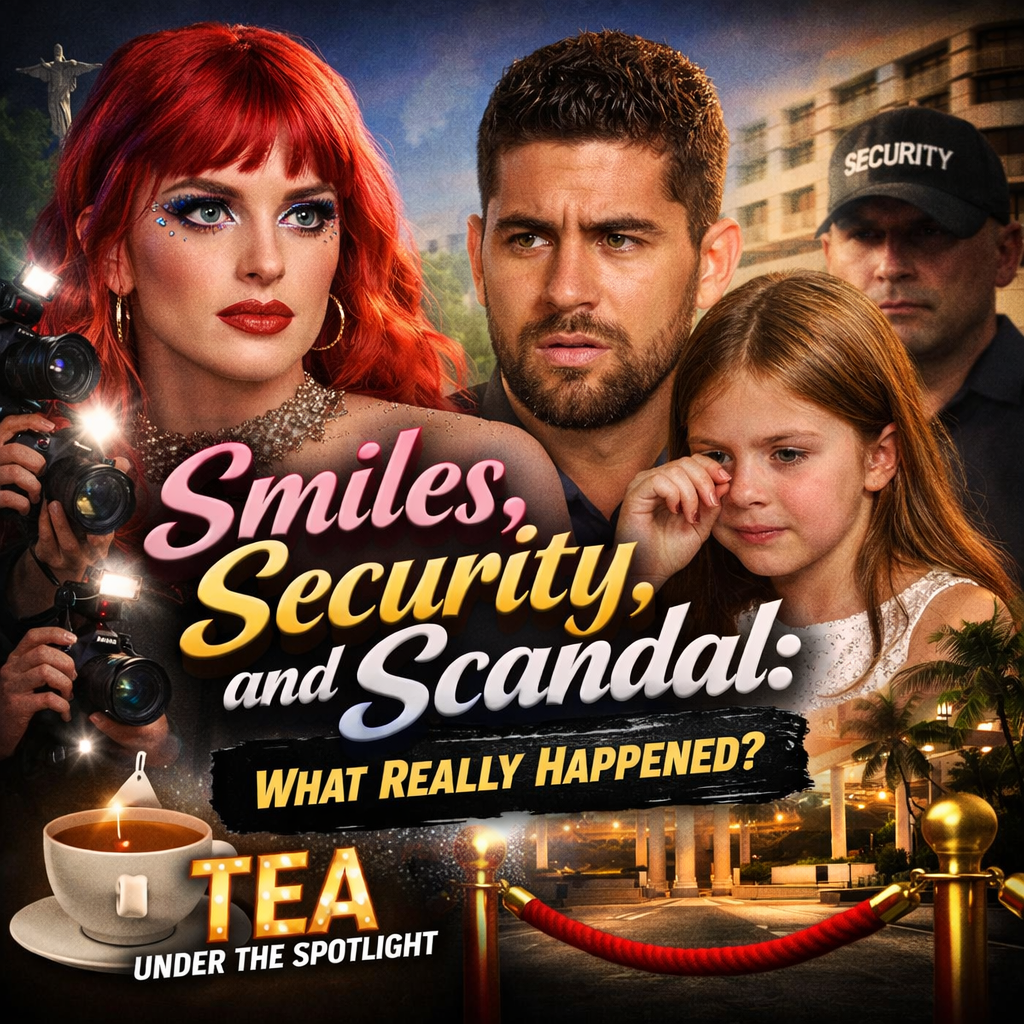
[00:02:02] Speaker A: And that staggering whiplash is exactly what allegedly happened on the morning of March 21, 2026. This was at the exclusive Palacio Tongara in Sao Paulo, Brazil. Right. And the people involved in this specific dining room, this wasn't just any random celebrity and an anonymous fan.
[00:02:19] Speaker B: Not at all.
[00:02:20] Speaker A: The celebrity in question was Grammy winning pop star Chapel Roan.
And the fan who was reportedly left in tears at her breakfast table, an 11 year old girl named Ada Law.
[00:02:31] Speaker B: Which is where the story goes from A bad hotel review to international news.
[00:02:36] Speaker A: Exactly. Because Ada happens to be the daughter of the British actor Jude Law and the stepdaughter of the Brazilian Italian football
[00:02:42] Speaker B: superstar Jorginho Frillo, which presents us with French, frankly, the absolute perfect recipe for a localized hotel disagreement. To bypass the concierge desk entirely, it just detonated into a massive, unprecedented global firestorm.
[00:02:57] Speaker A: Detonate is really the only word for it. So today we are taking a massive deep dive into the fallout of that single breakfast encounter.
[00:03:05] Speaker B: And we have a pretty intimidating stack of sources laid out in front of us for this one.
[00:03:08] Speaker A: We really do. We're pulling from detailed entertainment news articles that have chronicled every single hour of the drama.
We also have this fascinating, highly comprehensive crisis analysis report.
[00:03:18] Speaker B: That report really details the hidden logistics of modern celebrity security protocols, which is super eye opening.
[00:03:25] Speaker A: Yeah. It changes how you look at the whole situation. And because we need to understand the cultural temperature, I've spent hours diving incredibly deep into the fierce, wildly polarized debates happening right now across various Reddit communities.
[00:03:39] Speaker B: Oh, the Reddit threads are intense.
[00:03:41] Speaker A: Extremely. From Rachel Lesbians to our Brazil to our Totten the Shadow, the debates are everywhere.
[00:03:48] Speaker B: But our mission for this deep dive needs to be stated clearly up front. I think. We are absolutely not here to traffic in cheap celebrity gossip.
[00:03:56] Speaker A: No, definitely not.
[00:03:57] Speaker B: Instead, we are using this specific, highly publicized incident as a high stakes stress test for the modern celebrity fan social contract.
Because this story, when you really peel back the layers, forces us to explore some incredibly complicated societal questions.
[00:04:12] Speaker A: Like what are the actual practical limits of a public figure's privacy in a shared space?
[00:04:17] Speaker B: Exactly. And what are the logistics and the very real dangers of VIP security details operating among the general public?
[00:04:23] Speaker A: And perhaps most crucially, what happens when deeply ingrained national cultural expectations of hospitality violently collide with the celebrity's strict, uncompromising personal boundaries?
[00:04:37] Speaker B: It's a massive collision of values.
[00:04:39] Speaker A: It is. But before we really get into the weeds here, I do need to put a very explicit disclaimer out there for you, the listener.
[00:04:46] Speaker B: This is important.
[00:04:47] Speaker A: As we wade into this, you need to know that the sources we are working from today contain highly, highly polarized viewpoints. The public backlash we are going to explore is intense.
[00:04:58] Speaker B: It's fiercely debated, and honestly, it often crosses into vitriol.
[00:05:02] Speaker A: Right. Our goal here today is to neutrally explore all signs of this event. We will look at the arguments of the people fiercely defending Chapel Rollins absolute right to strict privacy.
[00:05:13] Speaker B: And we will also examine the arguments of those who are completely appalled by the reported treatment of an 11 year old child.
[00:05:19] Speaker A: We are not endorsing any specific faction. We aren't picking a side. We are just here to follow the facts, understand the underlying mechanisms at play, and unpack what this all means for the culture at large.
[00:05:30] Speaker B: That neutrality is vital.
We are analyzing the friction points of modern fame, not passing moral judgment on the individuals caught in the machinery.
[00:05:39] Speaker A: Okay, so let's lay out the actual anatomy of this encounter. We need to understand the board before we look at the pieces.
[00:05:45] Speaker B: Sounds good.
[00:05:46] Speaker A: We are in Sao Paulo, Brazil. It's the weekend of the Lollapalooza Brazil music festival, which is an absolutely colossal event.
Hundreds of thousands of people are descending on the city.
[00:05:57] Speaker B: The energy is just chaotic.
[00:05:59] Speaker A: Totally. The setting for our incident is the Palacio Tangara. Now, according to the crisis analysis report we have, we need to understand what kind of space this is.
[00:06:09] Speaker B: Right. Because this is not a budget motel off the interstate.
[00:06:11] Speaker A: Not even close. This is an ultra luxury property. It's an architectural marvel surrounded by a tropical park. It is the kind of place specifically utilized by international artists, diplomats and ultra high net worth individuals.
[00:06:24] Speaker B: Because it implicitly promises absolute seclusion, high highly vetted access and top tier service. It is basically designed to be a fortress of comfort.
[00:06:33] Speaker A: And the environment dictates the expectation. Right. When an artist books a stay at a property like the Palacio Tangara, the exorbitant room rate isn't just paying for high thread count sheets.
[00:06:43] Speaker B: No, it is paying for a curated environment.
The implicit promise is that the public, the crowds are kept at the gates.
[00:06:51] Speaker A: Exactly. Therefore every single person who makes it into that dining room for breakfast and is a paying guest of a certain verified status.
[00:06:58] Speaker B: The hotel essentially acts as a massive filter. It creates this false sense of a purely private environment within a space that is technically still shared among strangers.
[00:07:09] Speaker A: And sharing that incredibly filtered space on this particular Thursday morning are two key parties. On one side of the room you have chapel Roan.
[00:07:16] Speaker B: And we really need to contextualize where she is at in her career at this exact moment in March 2026.
[00:07:22] Speaker A: Yes, she is fresh off an unbelievable meteoric year. She just won the best new artist Grammy. She is headlining Lollapalooza. Her songs are ubiquitous global anthems.
[00:07:31] Speaker B: She has gone from playing mid sized venues to being one of the most recognizable faces on the planet in a very, very compressed time frame.
[00:07:38] Speaker A: The pressure quicker of that sudden exponential level of fame is just immense.
[00:07:44] Speaker B: The velocity of her rise is critical context here. When fame scales that quickly, the the infrastructure around the artist, their security, their mental health protocols, their team's ability to manage public interaction, it often really struggles to catch up.
[00:07:58] Speaker A: Yeah, that makes sense.
[00:07:59] Speaker B: The artist is thrust into a reality where every single time they leave their bedroom, they are perceived, analyzed, and consumed by the public.
[00:08:07] Speaker A: So on the other side of that same dining room, you have the family of Jorginho Frillo. And Jorginho is wildly famous in his own right, but in a very different
[00:08:16] Speaker B: sphere, a completely different type of fame.
[00:08:19] Speaker A: Right. He is a midfielder for the Brazilian football club Flamengo, which is essentially a religion in Brazil. He's a former Champions League winner. He carries immense cultural weight.
[00:08:28] Speaker B: He is there having breakfast with his wife, the singer Katherine Harding, who also goes by Cat Cavelli professionally, and her 11 year old daughter, Ada Law.
[00:08:36] Speaker A: If we zoom in on the microdynamics of the encounter itself, relying on the details provided in the crisis report, which are corroborated by the family's public statements.
[00:08:46] Speaker B: Right. The incident originates from a place of very typical adolescent excitement.
[00:08:50] Speaker A: Yeah. Ada Law is described as a huge chaperone fan. The sources specifically note that she had even spent time earlier that morning making a handmade hot to go sign with markers explicitly for the concert they were planning to attend later that day.
[00:09:05] Speaker B: I love that detail because it really grounds the story. That is such pure, classic, innocent fan behavior.
[00:09:11] Speaker A: It totally is. If you are 11 years old and you are going to a music festival, making a sign in your hotel room is just part of the ritual.
[00:09:19] Speaker B: Exactly. And it establishes her intent.
So Eda and her mother are navigating the breakfast buffet. During this process, Ada allegedly walks past the table where Chapelron is seated.
[00:09:29] Speaker A: And according to the detailed accounts provided by Jorginho and Katherine Harding, Ada did not approach the table.
[00:09:34] Speaker B: She didn't. She simply looked over to confirm if the person sitting there was actually the pop star she idolized.
She smiled upon recognizing her, and then she continued walking right back to her own seat with her mother.
[00:09:46] Speaker A: Okay, let's unpack this because I want to highlight something all of our sources agree on. This is the pivot point of this entire controversy. There was absolutely no physical contact.
[00:09:57] Speaker B: Zero physical proximity was breached.
[00:09:59] Speaker A: There was no attempt to initiate a conversation. There was no request for an autograph.
No one pulled out a smartphone to take a covert video for TikTok or snap a flash photograph.
[00:10:11] Speaker B: Nothing like that. By all accounts, it was merely a look and a smile from across a shared room.
[00:10:15] Speaker A: Yet the escalation that immediately followed was staggeringly severe.
According to the family's timeline, very shortly after Ada had returned to her table and sat down a Figure described as a large security guard approached them.
[00:10:29] Speaker B: And this approach was not characterized as a polite, discreet request from a handler asking for the artist to be given some space.
[00:10:36] Speaker A: No. The guard allegedly initiated the interaction in an extremely aggressive manner.
He verbally reprimanded the 11 year old girl and her mother. He was loudly accusing the child of harassment and disrespect.
[00:10:50] Speaker B: He didn't just stop at the child either.
[00:10:52] Speaker A: Right. He actively lectured the mother on her parenting skills in the middle of this luxury restaurant.
[00:10:58] Speaker B: The sources state the guard explicitly criticized the child's bad education, which in Portuguese translates closer to a lack of proper upbringing or manners. And then he escalated the threat.
[00:11:08] Speaker A: Unbelievable.
[00:11:09] Speaker B: He told the mother he was going to file a formal complaint with the hotel's upper management to have them dealt
[00:11:14] Speaker A: with the psychological impact of a massive, professionally trained security operative bearing down on and berating a child in a public dining room was immediate and devastating. Georgina reported that Ada was left in tears, stating she was extremely shaken and deeply intimidated by the entire ordeal.
[00:11:31] Speaker B: It's awful. And let's try to conceptualize the friction of this shared space. Think of a luxury hotel dining room like a shared first class cabin on a transatlantic flight.
[00:11:41] Speaker A: That's a great analogy.
[00:11:42] Speaker B: Everyone in that cabin paid a massive premium to be there. You all have an expectation of elevated comfort and discretion. But here is the fundamental.
Does purchasing a first class ticket grant you the legal or ethical right to absolute, uninterrupted visual isolation?
[00:12:01] Speaker A: Exactly. By entering that shared space, don't you tacitly agree to coexist with the other passengers? If you demand an environment where no other human being is even permitted to look in your direction, shouldn't you just order room service and stay behind a locked door?
[00:12:16] Speaker B: You've isolated the exact philosophical tension that the crisis analysis report focuses on. Katherine Harding, Ada's mother, actually builds her entire public rebuttal around this identical premise.
[00:12:27] Speaker A: She argued forcefully that as a paying guest in a communal, albeit exclusive, area of the hotel, she and her daughter possess a fundamental right to exist in that space without being subjected to intimidation tactics by another guest's private staff.
[00:12:39] Speaker B: However, to understand why the security acted this way, we do have to look at chaperone's heavily established public brand.
[00:12:45] Speaker A: Right.
Long before this specific incident in Brazil, Ron has been incredibly vocal and proactive about establishing strict, uncompromising boundaries.
[00:12:55] Speaker B: She really has. She has utilized her massive platform to publicly call out fans for what she deems creepy or invasive behavior.
[00:13:03] Speaker A: She has spoken eloquently about the psychological toll of fame too. She stated she feels disregarded as a human when people treat her as a commodity to be gawked at in public spaces.
[00:13:13] Speaker B: She has absolutely made protecting her personal space a core tenet of her public Persona. And, you know, many fans applaud her for that.
[00:13:21] Speaker A: But there has to be a distinction between setting a firm boundary against a stalker who is following you down the street and ceasing a massive security guard on a smiling preteen in a high end restaurant.
[00:13:33] Speaker B: There's a huge difference.
[00:13:34] Speaker A: If this exact scenario, a guard yelling at a kid for looking, had happened to an average, everyday family on a vacation, it probably would have ended with a very angry shouting match at the concierge desk.
[00:13:44] Speaker B: Maybe the hotel comps the family's breakfast to smooth things over.
[00:13:48] Speaker A: Right, and it results in a scathing one star review on TripAdvisor. But because of who this family was, the incident bypassed the concierge desk entirely. It instantly went global.
[00:13:59] Speaker B: The power dynamics at play completely subverted the usual Hollywood PR playbook. Giorgino Farlo is not an anonymous tourist who can be bullied into silence by a celebrity's team.
[00:14:09] Speaker A: No, he possesses his own massive, highly mobilized sphere of influence.
[00:14:14] Speaker B: Which brings us to the astonishing viral velocity of this event.
Our crisis report dedicates a whole section to what they call the power of the Papa Bear narrative.
[00:14:23] Speaker A: Oh, this is fascinating. Jorginho did not go to the hotel management. He went straight to the Internet, direct to the people. He took out his phone and posted a lengthy, deeply explosive story to his Instagram account, broadcasting it directly to his 5 million followers.
[00:14:37] Speaker B: And he was very strategic.
[00:14:39] Speaker A: Highly strategic. He wrote the post in both Portuguese and English to ensure maximum domestic and international reach.
He directly tagged Chapelron's official account, so there was no ambiguity.
[00:14:50] Speaker B: And the absolute kicker of his post, the part that got screenshotted and shared millions of times, was written in aggressive, all capital letters.
[00:14:58] Speaker A: Yeah, he wrote, without your fans, you would be nothing. And to the fans, she does not deserve your affection.
[00:15:05] Speaker B: Let's examine the mechanics of why that post was so devastating. The crisis analysis uses a term here called stakeholder profiling.
[00:15:12] Speaker A: Wait, before we dive into how the PR teams scrambled to react, what exactly does stakeholder profiling mean in this specific context? Are crisis PR firms actually mapping out a football star's cultural influence like a military operation?
[00:15:27] Speaker B: They absolutely are. In crisis management, stakeholder profiling means analyzing the individual who is attacking your client to understand their specific leverage points, their audience demographics, and their cultural credibility.
[00:15:39] Speaker A: Wow.
[00:15:39] Speaker B: So when Roland's team profiled Jorginho, they would have Seen a nightmare scenario. He isn't just posting a random grievance.
[00:15:45] Speaker A: Right. By framing the narrative around a child admiring someone and being punished for it, Jorginho immediately tapped into a universal, primal papa bear archetype.
[00:15:53] Speaker B: He is the strong father defending his innocent cub from an unprovoked attack.
[00:15:58] Speaker A: Furthermore, in Brazil, you have a culture that places a massive foundational premium on family warmth and hospitality.
[00:16:05] Speaker B: Exactly.
Seeing a beloved national sports figure describe his young daughter being brought to tears by the aggressive staff of an American pop star, I mean, it created the perfect storm for intense nationalistic public outrage.
[00:16:19] Speaker A: The cultural context cannot be overstated. He plays for Flamengo. If you don't follow Brazilian football, Flamengo is arguably the most popular, influential sports institution in the country.
[00:16:30] Speaker B: When a player of his caliber speaks, the entire nation listens.
[00:16:34] Speaker A: And our sources point out this incredible, almost cinematic layer of irony regarding the family's lineage. Ada's biological father is Jude Law.
We really need to pause and look at Jude Law's history with the press to understand the profound shift in celebrity culture. Jude Law spent literally a decade fighting vicious, deeply traumatic battles with the British tabloid press in the early 2000s to protect his family's privacy.
[00:16:59] Speaker B: We are talking about the era of the News of the World phone hacking scandal.
[00:17:03] Speaker A: Yes.
He had paparazzi physically chasing his cars, legally compromising his voicemails, and staking out his home to steal images of his children. He sued major media conglomerates just to keep aggressive cameras away from his kids.
[00:17:17] Speaker B: He was fighting against actual physical danger and massive corporate privacy violations.
[00:17:23] Speaker A: And now, in 2026, in this bizarre twist of fate, his own child is being aggressively accused of harassment and invading the privacy of another celebrity simply for looking at her in a restaurant.
[00:17:35] Speaker B: That contrast brilliantly illustrates how the very definition of privacy and intrusion has shifted over the last 20 years.
Jude Law was fighting against professional monetized surveillance that posed a physical threat. Chapelrone's security, conversely, was seemingly fighting against an 11 year old girl, simply directing her gaze towards the artist.
[00:17:55] Speaker A: It demonstrates a dramatic escalation in what modern celebrities consider to be and actionable intrusion on their space.
[00:18:01] Speaker B: Absolutely. And the timeline of how this played out publicly only poured gasoline on the fire. Let's trace it.
[00:18:07] Speaker A: Okay, let's look at the timeline.
[00:18:09] Speaker B: Jorginho posts his explosive Instagram story on Saturday morning. It instantly catches fire online, trending globally across X and TikTok.
[00:18:18] Speaker A: Right. And then a few hours later, Saturday evening, Chapelron takes the stage to headline Lollapalooza Brazil in front of tens of
[00:18:26] Speaker B: thousands of people and during her set, what does she do? She pauses the music to give a public shout out from the stage, specifically thanking her security and crew.
[00:18:36] Speaker A: The optics of that moment, regardless of her intent, were absolutely disastrous from a public relations standpoint.
I have to admit, I watched the clip of that Loll Palooza shout out. She's standing up there breathing heavily after a song, and she just casually thanks her crew and security for keeping her safe on tour. It seems entirely innocuous to me.
[00:18:55] Speaker B: Artists do this at literally every single show.
[00:18:57] Speaker A: Exactly. Why does the Internet take a routine concert shout out and turn it into evidence of malice? I feel like the public was completely overreacting and looking for a reason to be angry.
[00:19:07] Speaker B: Well, you're hitting on the core vulnerability of the Internet age, the complete collapse of context.
You are correct that thanking the crew is standard industry practice, right? It is highly probable that when she made that statement on stage, she had absolutely no idea that Jorginho's post was was currently going viral globally. Or perhaps she hadn't even been fully briefed on the specific severity of the breakfast incident yet.
[00:19:31] Speaker A: That makes total sense.
However, the millions of people watching clips of her performance online possessed all of that context exactly.
[00:19:40] Speaker B: They had just read a viral post about a security guard bullying a child.
So when they see the artist stand on a massive stage hours later and enthusiastically praise her security team, the Internet does not give her the benefit of the doubt.
[00:19:54] Speaker A: It interprets that standard shout out as a defiant, deliberate endorsement of the guard's behavior. It reads as arrogant, unapologetic and cruel.
[00:20:02] Speaker B: It cemented the narrative that she was untouchable and uncaring, forcing her team into
[00:20:07] Speaker A: a corner, which forced her to issue a response the very next morning. This is where we get the famous response from the bed, which has been endlessly dissected by crisis PR experts.
[00:20:17] Speaker B: Oh, this video.
Sunday morning, Chapelron posts a video directly to her own 8 million Instagram followers. She is literally lying in bed, recording herself, holding her phone.
[00:20:30] Speaker A: And she offers three specific defenses.
Let's break these down thoroughly. First, she claims she didn't even see a woman and a child.
[00:20:38] Speaker B: She says no one approached her table, no one verbally bothered her. She was entirely unaware of any interaction while she was eating her breakfast.
[00:20:45] Speaker A: Her second defense is purely contractual. She explicitly states that the guard involved the altercation was, and I quote, not my personal security.
[00:20:54] Speaker B: She asserts that she did not dispatch the guard, nor did she ask anyone to go over to the mother and child and reprimand them.
[00:20:59] Speaker A: And her third point is what the analysts in our crisis report categorize as a conditional apology. She looks at the camera and says, I do not hate children. That is crazy.
[00:21:09] Speaker B: And then she adds the condition, right?
[00:21:11] Speaker A: I'm sorry to the mother and child that someone was assuming something and that if you felt uncomfortable, that makes me really sad. You did not deserve that.
[00:21:19] Speaker B: If we evaluate this video strictly as a piece of crisis communication, it fails on almost every conceivable level. First, let's analyze the medium.
[00:21:29] Speaker A: The bed aesthetic.
[00:21:30] Speaker B: Yes, filming yourself lying in bed, makeup free, speaking casually into a smartphone is a very deliberate tactic. It is meant to convey rawness, vulnerability, and unfiltered authenticity. It is the dominant expected format for Gen Z creators addressing drama on TikTok.
[00:21:48] Speaker A: But why doesn't that work here? If her audience is mostly Gen Z, shouldn't she speak to them in their
[00:21:53] Speaker B: preferred visual language because the severity of the crisis mismatched the casualness of the medium. When the drama involves a petty feud with another singer, the bed video works. But when the allegations involve a grown, professionally trained man aggressively intimidating a minor in a foreign country, that informal aesthetic suddenly feels entirely inappropriate.
[00:22:13] Speaker A: It completely lacks the professional gravity required when a child's emotional distress is at the center of the controversy.
[00:22:19] Speaker B: Exactly. By addressing the situation from the comfort of her bed, she subconsciously signaled to the audience that she was not taking the allegations or the distress of the 11 year old seriously.
[00:22:30] Speaker A: The medium completely undermined the message. Now let's talk about her second defense, the not my personal security argument. Here's where it gets really interesting.
[00:22:39] Speaker B: Let's hear it.
[00:22:41] Speaker A: I want to use a corporate analogy for everyone listening right now to explain why this defense angered people so much.
Imagine the CEO of a massive Fortune 500 company. That CEO hires a third party independent contracting firm to handle security in the lobby of their corporate headquarters.
One day, one of those contracted guards aggressively and verbally harasses a customer who just walked through the front door. Right? When the press finds out that CEO cannot stand at a podium and say, well, technically they don't work directly for me. They work for the contracting firm. They aren't on my payroll, so my hands are clean.
[00:23:17] Speaker B: Because the public fundamentally does not care whose name is printed on the guard's paycheck.
[00:23:21] Speaker A: Exactly. The public expects the person at the top of the pyramid to take absolute responsibility for the environment that is being created in their name, on their behalf and for their direct benefit.
[00:23:32] Speaker B: That analogy perfectly encapsulates the structural flaw in her defense. And it is precisely the argument Katherine Harding, ada's mother, utilized when she posted her own video rebuttal later that day,
[00:23:45] Speaker A: Harding completely rejected Roan's attempt to distance herself from the guard. She argued that when you reach that specific magnitude of celebrity, you carry a fundamental, inescapable responsibility.
[00:23:57] Speaker B: A responsibility to ensure that the people acting on your behalf, whether they are your direct salaried employees, local venue contractors, or hotel staff assigned to your detail, are behaving appropriately. You, the artist, set the tone exactly.
[00:24:11] Speaker A: A security guard doesn't just wake up, clock in, and decide to yell at a child in a luxury dining room for fun. He was almost certainly acting on what he perceived the client Chapel Rowan wanted.
[00:24:21] Speaker B: And why did he think she wanted an aggressive perimeter? Because her well documented, highly publicized hatred of being looked at in public has established a zero tolerance tone.
[00:24:32] Speaker A: Her team knows her boundaries are absolute, and so the contractors enforce those boundaries aggressively.
[00:24:37] Speaker B: By attempting to shrug off the incident from her bed and passing the blame to an unnamed contractor, Roan didn't quell the controversy. She amplified it.
[00:24:46] Speaker A: She fed into the narrative that international celebrities view local staff and local fans as disposable commodities.
[00:24:53] Speaker B: And that perceived lack of accountability didn't just generate angry comments on Reddit. It escalated the situation from a pop culture spat into a geopolitical municipal crisis.
[00:25:04] Speaker A: This is where the story goes from a tabloid headline to something entirely unprecedented. Enter Eduardo Cavallieri, the mayor of Rio de Janeiro.
[00:25:11] Speaker B: He is watching this play out online, right?
[00:25:13] Speaker A: He sees the viral post from Jorginho. He sees the tepid apology video. He sees the mounting public anger across Brazil. And he decides to use his political office to make a massive intervention.
[00:25:25] Speaker B: The mayor takes to the social media platform X and permanently bans Chapelroan from performing at Totomunono Rio for the entire duration of his political administration.
[00:25:36] Speaker A: We need to ensure you, the listener, understand the scale of what the mayor just did. Toto Mudo. No, Rio is not a small, private club gig that a promoter can just easily move to another venue.
[00:25:48] Speaker B: No, it is a massive, internationally renowned free music festival held directly on Copacabana beach.
[00:25:55] Speaker A: We are talking about crowd sizes that frequently exceed 1 million people. It is a cultural crown jewel for the city, broadcast globally.
[00:26:03] Speaker B: Now, if you are listening to this and thinking, wait, how does a municipal mayor even have the legal authority to ban a specific musician from a beach?
[00:26:10] Speaker A: I have the exact same question. How does that actually work?
[00:26:12] Speaker B: Mechanically, it works because Toto Mundo Nerio is a public private partnership. The festival requires massive municipal infrastructure, city police, sanitation, traffic control, and public permitting for the use of Copacabana beach, which is public Land.
[00:26:26] Speaker A: I see.
[00:26:27] Speaker B: Furthermore, the city often provides direct financial subsidies to the festival organizers. Because the mayor controls the permits and the municipal funding, he possesses the absolute legal and logistical authority to dictate terms to the organizers.
[00:26:42] Speaker A: So if he says an artist is a threat to public order or contradicts the values of the city, the organizers have no choice but to drop the artist or they lose their festival entirely.
[00:26:52] Speaker B: Precisely.
[00:26:53] Speaker A: So he uses this massive lever of municipal power. But he doesn't just ban her quietly, he turns it into a spectacle.
[00:27:00] Speaker B: Oh, he really does.
[00:27:01] Speaker A: In his post, he throws serious, calculated shade. He writes, I doubt that Shakira would do that. And then he executes this incredibly savvy, almost theatrical political move.
[00:27:10] Speaker B: The invitation.
[00:27:11] Speaker A: Right. He publicly invites the 11 year old ADA law to be his personal guest of honor at Shakira's Upcomin Copacabana show in May.
[00:27:19] Speaker B: The mayor's actions are a masterclass in weaponizing cultural friction for political gain.
Think about the specific contrast he is drawing by invoking Shakira.
[00:27:29] Speaker A: Shakira is a massive, legendary Latin American icon.
Her entire brand is built on vibrant energy, approachability and a deep visceral connection with her massive crowds.
[00:27:40] Speaker B: Exactly. By placing Shakira's warmth directly alongside Chapel Ron's perceived coldness, the mayor is perfectly framing the narrative.
[00:27:48] Speaker A: He is positioning himself and the city of Rio de Janeiro as the ultimate protectors of Brazilian citizens and traditional cultural values against the cold, clinical arrogance of a disconnected American pop star.
[00:28:00] Speaker B: It is brilliant, highly effective political theater.
[00:28:03] Speaker A: It's populism at its finest.
But let's look beyond the politics of the mayor. What are the actual tangible financial and reputational deterrence this creates for the music industry?
Being banned from Copacabana beach has to be a massive blow to a touring artist.
[00:28:18] Speaker B: It creates a massive industry wide chilling effect.
The crisis report explicitly suggests that moving forward, international booking agents and tour promoters will view Brazil differently.
[00:28:28] Speaker A: So future performance contracts for international artists touring in South America might start implicitly or even explicitly through morality clauses requiring strict alignment with local cultural expectations of conduct.
[00:28:41] Speaker B: Exactly. Promoters are risk averse. They do not want to invest millions of dollars booking an artist whose aggressive security detail might trigger a national boycott
[00:28:51] Speaker A: or worse, a mayoral ban that cancels a multi million dollar festival date.
[00:28:56] Speaker B: Right. It sends a very clear signal to management teams in Los Angeles and London. An artist's personal philosophical stance on strict boundaries cannot completely supersede the cultural norms of the host country without triggering severe financial consequences.
[00:29:11] Speaker A: We have a scenario where a mayor, a massive football star, a Hollywood ex husband And a grammy winning pop star are all locked in this chaotic circus over a breakfast buffet.
[00:29:21] Speaker B: It's wild when you list it all out like that.
[00:29:23] Speaker A: It really is. Yeah. But beneath the circus, there is a very real, very serious debate happening. I want to pivot to the broader psychological and sociological analysis that our sources provided.
[00:29:33] Speaker B: The crisis analysis document dedicates an entire fascinating section to this right.
[00:29:39] Speaker A: They call it the boundary discourse versus policing the public gaze. This gets to the heart of the matter. How do we actually practically define harassment in this age of hypersocial, always online celebrity?
[00:29:53] Speaker B: That is the core philosophical issue that this entire incident has exposed. You have two competing, valid realities.
[00:30:00] Speaker A: On one hand, you have chavyron's deeply human desire to simply sit down and eat a plate of eggs without feeling like an animal trapped in a glass enclosure at a zoo.
[00:30:09] Speaker B: She has repeatedly stated she hates being disregarded as a human. And we have to acknowledge that it is psychologically exhausting to exist in a state where you are constantly being perceived, analyzed, and evaluated by strangers every time you leave your private residence.
[00:30:23] Speaker A: I completely agree with that. The psychological toll must be immense. But on the other hand, you have the physical reality of existing in a shared space. The dining room of the Palacio congara, despite its exclusivity, is still a communal area. If you choose to leave your private suite and enter a room with other human beings, those human beings are going to look at you. It is involuntary human nature to look at things that are recognizable.
[00:30:48] Speaker B: The crisis analysts point out a critical, very recent, and somewhat alarming shift in how celebrity security operates to manage this reality.
[00:30:57] Speaker A: Okay, tell me more about this shift.
[00:30:59] Speaker B: Historically, going back decades, celebrity security details existed almost exclusively to protect an artist's physical safety. Their job was to prevent stalkers from approaching, to stop physical assaults, or to ensure crowds didn't physically crush the artist in a panic.
[00:31:14] Speaker A: Which makes total sense.
[00:31:15] Speaker B: And now, in the 2020s, we are seeing a massive shift where security teams are being actively deployed to protect an artist's visual comfort.
[00:31:22] Speaker A: Wait, visual comfort?
[00:31:24] Speaker B: Yes.
Their mandate has expanded from preventing physical harm to preventing people from even looking at the artist.
[00:31:30] Speaker A: That is a wild concept.
How does a security team actually enforce visual comfort in a public space? What are the actual mechanisms they use to stop people from looking?
[00:31:42] Speaker B: The tactics are aggressive and highly disruptive. We see security teams using large black umbrellas to create moving barricades around an artist as they walk from a car to a building, physically blocking the sight lines of anyone on the street.
[00:31:56] Speaker A: Oh, I've seen that in paparazzi. Videos.
[00:31:58] Speaker B: Right. We also see security personnel using high powered laser pointers to blind the lenses of cell phone cameras if someone tries to take a photo from a distance.
[00:32:07] Speaker A: Lasers. Seriously?
[00:32:09] Speaker B: Yeah. And in extreme cases like high end restaurants, security teams will advance, clear a room, or they will stand at the perimeter of an artist's table and aggressively stare down or intimidate any patron who directs their gaze toward the client.
[00:32:22] Speaker A: They are actively policing the environment to eliminate the public gaze. Now, if you are listening to this and thinking, this Sounds insane, an 11 year old girl smiling from across a room shouldn't be treated like a bomb threat. You are hitting on the exact danger of this shift.
If professional security forces are deployed to neutralize a smile, are we effectively criminalizing the very act of admiration?
[00:32:46] Speaker B: That is the exact poignant question Jorginho raised in his initial post. He asked, I don't know in what world just passing by a table and looking can be considered harassment.
[00:32:56] Speaker A: When a security apparatus begins pleasing the public gaze, they are attempting to control basic human nature within a shared environment.
[00:33:04] Speaker B: It is an impossible standard to enforce, and attempting to enforce it requires a level of hostility that inevitably shatters the social contract.
[00:33:11] Speaker A: We saw this exact highly polarized tension reflected in the peer commentary from other musicians who weighed in on the drama. Our sources highlight two drastically different reactions from within the music industry.
[00:33:21] Speaker B: Right. The industry itself is split on this.
[00:33:23] Speaker A: First, you have the folk rock singer Noah Kahan. He jumped into the discourse to heavily defend Roman's overall need for strict privacy. He didn't specifically address the incident with the child, but he spoke at length about the terrifying reality of invasive paparazzi culture today.
[00:33:40] Speaker B: He talked about people tracking his private flights, using the Internet to find out exactly which hotel his family is staying
[00:33:45] Speaker A: at, and literally camping outside his lobby just to guilt him into signing merchandise that they immediately sell online for profit. He was essentially telling the public, look, you guys have no idea the absolute siege mentality we have to live under just to survive this industry.
[00:33:59] Speaker B: Kahan is highlighting the very real modern trauma of fame. When your physical location is constantly hunted by organized groups seeking to profit off your image, your baseline anxiety remains incredibly high.
[00:34:13] Speaker A: You lose the ability to distinguish between a genuine harmless fan and an opportunistic threat.
Everyone in a public space begins to look like a potential predator.
[00:34:22] Speaker B: I understand the siege mentality, but then you have to counter Kahan's perspective with the viewpoint of a pot veteran who has lived through peak global fame.
[00:34:31] Speaker A: Boy George.
[00:34:32] Speaker B: Yes, Boy George weighed in on the situation and his advice was entirely different.
He essentially told Roan that she needed to own her fame and to cheer up, he literally wrote in a post, boundaries are boring. Break them with the magic of kindness.
[00:34:46] Speaker A: Wow. Boundaries are boring. That perfectly encapsulates the very old school, traditional view of celebrity. He came up in the 1980s, an
[00:34:54] Speaker B: era where the complete loss of your personal anonymity was widely accepted as the direct, unavoidable tax you paid in exchange for immense wealth and global adoration.
[00:35:03] Speaker A: In that era, the contract was simple. You smiled, you waved, you kissed the babies, and you signed the autographs because those people bought your records and funded your lifestyle.
[00:35:11] Speaker B: The modern artist, however, represented by Rhone, is actively trying to fundamentally renegotiate that contract. They want the wealth, they want the massive cultural platform, and they want the critical acclaim. But they are demanding to retain the anonymity and absolute boundaries of a private citizen the moment they step off the stage.
[00:35:30] Speaker A: And that aggressive renegotiation of the social contract is exactly what is tearing the Internet apart right now. I spent hours reading through the Reddit sources provided in our stack, and I have to tell you, the digital divide on this issue is fascinating.
[00:35:43] Speaker B: It's complex and incredibly vicious.
[00:35:46] Speaker A: We looked at massive, heavily populated threads across communities like rational lesbians brewing UPA heads of Brazil and Artada and the Shadow. The public reaction is fiercely divided into two primary camps. Let's start by looking at Camp A.
[00:35:59] Speaker B: The Defenders.
[00:36:00] Speaker A: We can call them the Defenders. Yeah, Yeah. I was genuinely surprised by their angle, especially in spaces like Rachel Lesbians. They weren't just blindly defending her music. They were arguing that this entire backlash is fundamentally rooted in misogyny.
[00:36:13] Speaker B: The Defenders construct a very compelling argument based on power dynamics. They look at the board and see a massively influential, wealthy male football star and a powerful male politician, the mayor of Rio, actively ganging up.
[00:36:27] Speaker A: Right? Actively ganging up to publicly crucify and humiliate a young, newly famous, queer female pop star. They view the entire incident as a coordinated witch hunt designed to put a vocal woman back in her place.
[00:36:41] Speaker B: They highlight a massive, undeniable double standard in how our culture treats celebrities based on gender.
[00:36:47] Speaker A: They argue that if a male rock star or a male rapper acts aloof, standoffish, or aggressively guards his privacy, he is routinely praised for being edgy, authentic, or a badass.
[00:36:57] Speaker B: But because Chapelron is a woman, there is an intense, deeply ingrained gendered expectation that she must be perpetually bubbly, endlessly maternal, and constantly accommodating to everyone who crosses her path at all times.
[00:37:09] Speaker A: The historical precedent for that argument is very strong. The Defenders rightly point out that society loves to build up female artists, only to tear them down the moment they express a boundary or exhibit behavior deemed difficult.
[00:37:20] Speaker B: One commenter on Reddit summed it up perfectly. They wrote, let girls be annoying and mean. Sometimes I feel like women are crucified if they aren't always smiling.
[00:37:29] Speaker A: They brought up the historical vitriolic hate trains that were launched against actresses like Anne Hathaway or Brie Larson a few years ago simply because the Internet decided they were unlikable or didn't smile enough in interviews.
[00:37:43] Speaker B: In addition to the misogyny argument, the Defenders also raise a very pragmatic psychological point regarding Jorginho's Papa Bear narrative.
[00:37:51] Speaker A: Oh, that's a good point.
[00:37:52] Speaker B: They suggest that the story we are being told might be significantly embellished. Parents understandably view the actions of their own children through rose colored glasses.
[00:38:00] Speaker A: It is an incredibly common phenomenon for a parent to exaggerate their child's innocence during a public dispute.
The Defenders question the timeline. Did the 11 year old truly just smile and immediately walk away?
[00:38:14] Speaker B: Or was she perhaps lingering near the table staring intensely for an extended period or behaving in a way that, while innocent to her, genuinely alarmed a security professional who is trained to spot irregular behavior patterns?
[00:38:26] Speaker A: Right. They are essentially saying we are all taking the incredibly biased word of an angry, embarrassed father as the absolute gospel truth, and we are using that unverified narrative to destroy a woman's hard earned reputation.
[00:38:41] Speaker B: It's a strong point.
[00:38:42] Speaker A: It definitely is.
[00:38:43] Speaker B: But wait, before we move to the other side, I noticed a phrase popping up a lot in the defense threads. People kept saying her core fans are parasocially attached. Can you define what parasocial attachment actually means in the context of modern pop music?
[00:38:55] Speaker A: Absolutely. A parasocial relationship is a one sided psychological bond where a fan feels a deep, intimate connection to a media figure who doesn't even know they exist.
[00:39:08] Speaker B: Oh, interesting.
[00:39:09] Speaker A: In the modern pop landscape, artists cultivate these bonds intensely through social media, sharing their personal struggles and speaking directly to the camera.
The fan begins to feel like the artist is their actual friend.
[00:39:20] Speaker B: So when that artist is attacked, the parasocially attached fan doesn't react like a consumer defending a product.
[00:39:25] Speaker A: Exactly. They react with the ferocity of someone defending their best friend from a bully. Which brings us perfectly to Camp B. Because Camp B believes that parasocial attachment has completely blinded the fan base, we can call Camp B the critics.
[00:39:40] Speaker B: And this camp is highly prominent on subreddits like RTOD and the Shadow and R Brazil. And let me tell you, they are absolutely not buying the witch hunt defense.
[00:39:50] Speaker A: The critics argue that the defenders are suffering from what one highly upvoted user dubbed Chapel Roan derangement syndrome. They believe that the core fan base is so deeply, parasocially entrenched that they are performing Olympic level mental gymnastics to excuse objectively terrible behavior.
[00:40:08] Speaker B: For the critics, the facts of the case are incredibly simple and no amount of sociological theorizing changes them.
Wealth, massive fame, and a generalized desire for privacy do not under any circumstances excuse sending a grown man to intimidate an 11 year old girl in a restaurant to the point of tears. Period.
[00:40:25] Speaker A: Their argument is rooted in basic accountability. They assert that the not my personal security defense she delivered from her bed was a massive cowardly cop out.
[00:40:34] Speaker B: The critics point out the hypocrisy you cannot spend a year aggressively cultivating a personal brand built entirely around enforcing strict boundaries and rejecting fan interaction, and then feign complete ignorance when the security apparatus built around you aggressively enforces those exact boundaries.
[00:40:53] Speaker A: One of the Reddit critics put it incredibly bluntly and it stuck with me. They wrote, if feminism to you means making little girls cry at breakfast, I'd rethink that one.
[00:41:02] Speaker B: That's harsh, but it's exactly what they're arguing.
[00:41:05] Speaker A: They also heavily push back on the double standard argument. They fully acknowledge that sexism is real, but they argue that if a male pop star's security team made a little girl cry at a buffet and then that male star posted a half hearted, dismissive apology from his unmade bed, the
[00:41:21] Speaker B: Internet would absolutely tear him apart with the exact same ferocity.
[00:41:24] Speaker A: What is truly fascinating about diving into these Reddit sources is the realization of how the modern public is changing its consumption habits.
In these threads, we see a massive growing movement of fans and aggressively decoupling the art from the artist's personal emotional availability.
[00:41:40] Speaker B: We found numerous fans who explicitly stated, I love her music. Her album is a masterpiece. I stream it every day and I honestly do not care if she is a mean person in real life.
[00:41:50] Speaker A: Yes, someone literally wrote I can be kind of a bitch in the morning too. Whatever Good tunes.
[00:41:56] Speaker B: It's like we are actively moving away from this desperate need for our pop stars to be our moral compasses or our imaginary best friends, which represents a
[00:42:04] Speaker A: profound seismic shift in the music industry model. For decades, the entire pop music machine was explicitly built on manufacturing the illusion of intimacy. Fan clubs, VIP meet and greets, endless social media engagement.
[00:42:18] Speaker B: It was all meticulously designed to make the fan feel like they actually knew the artist. But now we are seeing a generation of fans saying, I am purchasing your audio product. I am paying for the aesthetic. I do not require you to be a good, warm person.
[00:42:31] Speaker A: It is a transition into a purely transactional view of art. But that specific transition, that hard shift toward a purely transactional relationship, forces every single listener to question what we actually owe the people we admire.
[00:42:44] Speaker B: And conversely, what they owe us.
Is buying a concert ticket or streaming an album just a clinical receipt for a service rendered? Or is it a buy in to a shared community, a shared human experience?
[00:42:57] Speaker A: That question is the ultimate unresolved tension of the Palacio Tangora incident. So let's take a breath and briefly recap the massive journey we've taken today.
[00:43:07] Speaker B: It's been quite a journey.
[00:43:08] Speaker A: We started with a simple, seemingly innocent hotel breakfast encounter. A young girl sees a pop star and smiles. But because of the hyper, anxious, highly guarded realities of modern fame, that simple smile triggered a severe, aggressive security response,
[00:43:23] Speaker B: which in turn triggered an angry celebrity father with millions of followers, which led to a poorly received, fundamentally flawed video apology recorded from a bed, which ultimately
[00:43:33] Speaker A: snowballed into a chaotic clash of mega fame, municipal bans from a powerful Brazilian mayor, and a global, deeply polarized Internet debate.
[00:43:41] Speaker B: A debate over whether our modern security culture has gone entirely too far in policing the public gaze.
[00:43:47] Speaker A: If we look at the final concluding insight from the Crisis Analysis report, it serves as a stark warning to the industry as modern artists continue to push aggressively for a purely clinical, transactional relationship with the public.
[00:44:00] Speaker B: A reality where interaction is only permitted to exist in the sterile, controlled space between the stage and the crowd and nowhere else.
[00:44:08] Speaker A: Exactly. They risk permanently alienating the very foundational affection that builds their careers in the first place.
Jorginho's All Caps warning. Without your fans, you would be nothing. Is not just an angry dad lashing out.
[00:44:21] Speaker B: It is a reminder of the historical, inescapable gravity of fame. You simply cannot harvest the immense economic and social benefits of global adoration while simultaneously attempting to entirely reject the physical human presence of the people who adore you.
[00:44:36] Speaker A: It really makes you wonder about the long term psychological cost of all this protection. I'll leave you, the listener, with final thought, to mull over as you go about your day. Think back to that luxury hotel breakfast buffet we started with.
[00:44:48] Speaker B: The omelet station, right?
[00:44:50] Speaker A: If the future of celebrity is a world where artists successfully build these invisible, impenetrable, intensely policed perimeters around themselves in all public spaces.
[00:45:02] Speaker B: Yeah.
[00:45:02] Speaker A: What happens to the emotional connection that built the music industry in the first place.
[00:45:06] Speaker B: The great question.
[00:45:08] Speaker A: If you strip away the magic of a shared human moment, if we criminalize even just a simple, unexpected smile from across a dining room, are we just left with a cold transaction? Are we just buying audio files from untouchable ghosts?
[00:45:20] Speaker B: That's a chilling thought.
[00:45:21] Speaker A: It really is. Thank you so much for taking the time to join us on this deep dive. Keep questioning the world around you, and we will see you next time.