Episode Transcript
[00:00:00] Speaker A: Welcome back to the Deep Dive. Today we are looking at a single night, right?
[00:00:05] Speaker B: Just yesterday.
[00:00:06] Speaker A: Yeah, yesterday's 2026 Brit Awards, which took place on February 28th. And somehow it managed to perfectly encapsulate basically all the most intense cultural flashpoints of the entire decade.
[00:00:19] Speaker B: It really did. It's a multifaceted collision of events.
[00:00:21] Speaker A: Exactly. And I want to set expectations right at the top here. We are not doing a standard rundown of, you know, who wore which designer label or who took home a glass statue. Right.
[00:00:31] Speaker B: That's not. This is.
[00:00:32] Speaker A: No, we are looking at the underlying machinery of the night. This is an exploration of public mourning. It's about how rapidly our musical landscapes are shifting. And it's about the incredibly intense, just unforgiving scrutiny of celebrity bodies in the modern era.
[00:00:47] Speaker B: It really serves as a near perfect microcosm for how modern society processes legacy. I mean, we have a historic geographical shift for the British music industry operating right in tandem with a highly publicized, deeply emotional moment of mourning. And it's for one of the most recognizable families in entertainment. All of it playing out live on a global stage with instantaneous public feedback.
[00:01:10] Speaker A: Instantaneous and brutal. To get to the bottom of all this, we're pulling from a massive stack of source material today. On the foundational side, we have the official Brit Awards press releases, the Wikipedia
[00:01:21] Speaker B: entries too, just to ground us in the logistical facts.
[00:01:24] Speaker A: Right. The logistics. Then we move into the media coverage. So fashion and entertainment reporting from outlets like the Times of India, the Manchester Evening News, Page Six, and we're also
[00:01:34] Speaker B: dissecting some really brilliant cultural analysis essays that just started circulating this morning. They're looking at what critics are already calling the post Aussie era, which is a heavy title.
[00:01:44] Speaker A: And perhaps most crucially, for understanding the true public sentiment today, we are diving deep into raw, unfiltered Reddit threads.
Just everyday people hashing out the harsh realities of Hollywood's so called Ozempic era.
[00:01:58] Speaker B: That specific blend of sources provides a crucial contrast. I think you have the highly sanitized focus group narratives pushed by award show organizers.
Exactly. The PR spin sitting directly alongside the anonymous, entirely unfiltered reactions of the general public. It allows us to view the cultural conversation not just from the top down, but from the bottom up.
[00:02:20] Speaker A: So our mission for this Deep Dive is to unpack this specific collision.
A historic, transformative night for British music, the posthumous honoring of a legendary cultural figure, and the fierce battle his daughter is currently waging for bodily autonomy under the glare of millions. Okay, let's unpack this by Starting with
[00:02:39] Speaker B: the literal ground the event was built on.
[00:02:40] Speaker A: Yes, because for the first time in its 46 year history, the British phonographic industry, the BPI, made a monumental decision regarding the venue itself.
[00:02:51] Speaker B: What's fascinating here is that they moved it out of London, which is huge. It's massive. For an institution that has been fundamentally London centric since its inception in 1977, uprooting the ceremony and moving it to the newly opened Co Op Live arena in Manchester. It's a massive logistical and symbolic pivot.
[00:03:07] Speaker A: The O2 arena in London had been the home of the Brits since 2011.
Moving an infrastructure of that size requires immense political and financial capital.
The sources detail a two year deal championed heavily by Greater Manchester Mayor Andy Burnham.
[00:03:22] Speaker B: Right. He was very vocal about this.
[00:03:24] Speaker A: Very. He publicly touted this as a massive coup for the region.
But it's more than just a real estate deal, isn't it? The BPI is explicitly trying to decentralize the music industry.
[00:03:35] Speaker B: They're tapping into Manchester's incredible, undeniable musical heritage. This is the city that birthed the Smiths, Oasis, Joy Division, the Stone Roses.
They even redesigned the award trophy itself to reflect this new geographical reality, which
[00:03:50] Speaker A: is a fascinating piece of semiotics in itself. The BPI commissioned fashion stylist Matthew Williamson to redesign the statuette.
[00:03:57] Speaker B: And instead of the traditional sleek metallic look, he created a sculpture cast in amber toned resin.
[00:04:02] Speaker A: Right.
[00:04:03] Speaker B: It was specifically formulated to resemble the golden honey of a worker bee.
[00:04:06] Speaker A: The Manchester Bee.
[00:04:07] Speaker B: Exactly. The civic symbol of industry and collective effort since the Industrial Revolution.
[00:04:12] Speaker A: It's a visual thesis statement. You hold that trophy and you are holding a piece of Northern working class mythology.
And that geographic shift away from the glossy capitol perfectly mirrored the musical shift we saw on stage yesterday.
[00:04:26] Speaker B: We witnessed a very distinct changing of the guard.
[00:04:29] Speaker A: If we look at the sweep that Olivia Dean pulled off, it's staggering.
[00:04:33] Speaker B: She completely dominated the night. I mean, she came in leading the nominations alongside Lola Young. Five nominations each, but Dean walked away with the Pillars of the ceremony.
[00:04:43] Speaker A: Artist of the Year, best pop act song of the year for Rein Me in, which was her collaboration with Sam Fender.
[00:04:49] Speaker B: And the absolute pinnacle, the MasterCard album of the year for the Art of Loving.
[00:04:53] Speaker A: Let's talk about the sound of the Art of Loving for a second. Because her sweep isn't just a win for a talented artist. It signifies a massive cultural pivot in mainstream music.
[00:05:03] Speaker B: It's a reaction.
[00:05:03] Speaker A: Yeah. If we look back the early 2000s, the charts were completely saturated with hyperpop. We were in an era of highly synthesized, mathematically perfect, algorithm driven digital aesthetics.
[00:05:15] Speaker B: The Charli XCX and Sophie influences were ubiquitous. The music of the early 2020s sounded like the Internet.
[00:05:22] Speaker A: Fast and fragmented.
[00:05:23] Speaker B: Fast, fragmented and artificial. What Olivia Dean offers and what the BPI overwhelmingly rewarded last night is a sharp U turn back to the tactile. The Art of Loving is heavily reliant
[00:05:35] Speaker A: on analog brass sweeping live string sections.
[00:05:39] Speaker B: Yes, and a highly vocally driven, almost messy lyrical aesthetic.
[00:05:44] Speaker A: Messy in the best way possible. It sounds like a live band sweating in a room together.
[00:05:48] Speaker B: Yeah.
[00:05:48] Speaker A: The cultural essays in our source stack theorize that this is a delayed post pandemic reaction. After years of digital isolation, the public, and clearly the voting academies are desperately craving music that feels distinctly human.
[00:06:00] Speaker B: They want to hear the breath taken before the vocal rest.
[00:06:02] Speaker A: Exactly. They want the slight imperfections.
[00:06:04] Speaker B: And we saw that esos rewarded across the board last night. Lola Young taking breakthrough artist reinforces this trend toward gritty, confessional songwriting. Wolf Alice winning group of the year champions that live visceral rock energy. You even had Noel Gallagher winning songwriter
[00:06:20] Speaker A: of the Year, which in Manchester is basically like crowning a local king.
[00:06:24] Speaker B: Precisely. It was a massive nod to the Brit pop era, anchoring the night's theme of northern musical dominance.
Even the international awards reflected a lean toward massive organic cultural phenomenons.
[00:06:37] Speaker A: Rosalia taking international artists.
[00:06:39] Speaker B: Right, and that inescapable and Bruno Mars collaboration. Apt winning international song. The entire night felt curated to celebrate authenticity over artificiality.
[00:06:51] Speaker A: But anytime you take a highly polished national establishment event and drop it into a region with deep, specific cultural pride, you are going to get friction.
[00:07:00] Speaker B: Definitely.
[00:07:01] Speaker A: And we got a very loud, very viral moment of friction, courtesy of Kelly Osbourne.
[00:07:05] Speaker B: The Aston Villa moment, yes, it was brief, but it spoke volumes about UK regional tribalism.
[00:07:11] Speaker A: It was hilarious and incredibly awkward. Kelly was on stage with her mother, Sharon, preparing to introduce a segment and she just leans into the microphone and chats. I hope I don't disrespect Manchester by saying this, but up the villa in
[00:07:22] Speaker B: Birmingham, forever referencing Aston Ville, of course,
[00:07:25] Speaker A: the football club her dad famously fanatically supported. And the Manchester crowd inside this brand new multimillion pound arena just instantly actively booed her.
[00:07:36] Speaker B: It was immediate. And what's fascinating here is how quickly the veneer of a prestigious awards show evaporates. When football and regional pride are invoked, it just vanishes. The rivalry between the Midlands, where Birmingham is located, and the North, Manchester's domain, is visceral. It's not necessarily a malicious booing, it's a reflex. Exactly. It's an immediate collective assertion of local identity.
[00:07:59] Speaker A: It turned the co op live arena into a football terrace for about 10 seconds. But as funny as that moment was, that idea of home, of fiercely defending your roots, connects perfectly to the emotional anchor of the entire broadcast. Because Kelly's shout out to Birmingham was the prelude to the night's centerpiece.
[00:08:16] Speaker B: The tribute to a legendary self proclaimed working class brummy.
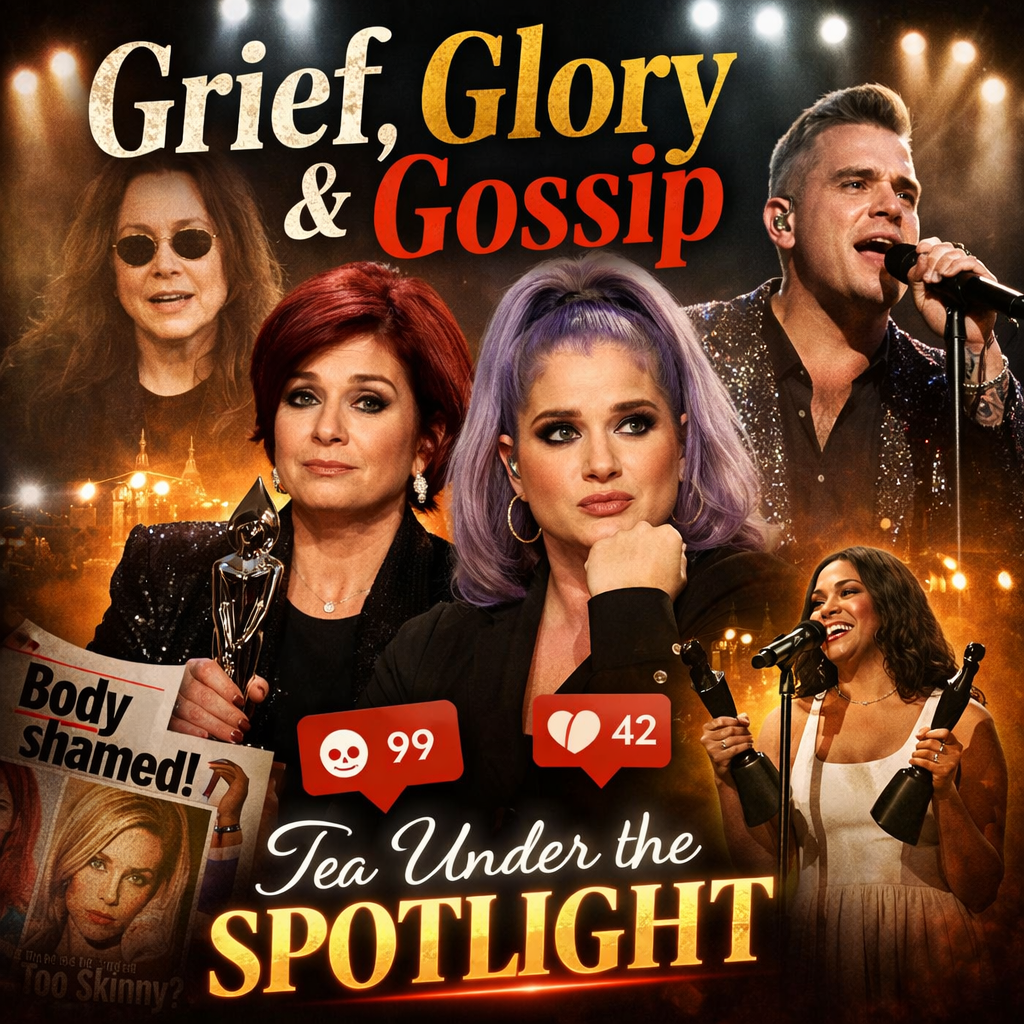
[00:08:20] Speaker A: The posthumous lifetime achievement award for Ozzy Osbourne. This was the moment that carried the most emotional weight of the evening. It served as both a public mourning and a cementation of legacy.
[00:08:29] Speaker B: Let's contextualize this for a moment. Ozzy Osbourne passed away on July 22, 2025 at the age of 76. Right. The sources confirmed the official cause of death was cardiac arrest and coronary artery disease. This followed a very long, very grueling and highly documented battle with Parkinson's disease,
[00:08:48] Speaker A: alongside severe spinal issues stemming from a fall he took in 2019.
[00:08:52] Speaker B: Yes. So to honor his 56 year career, from the Birmingham thugs with Black Sabbath to global reality TV superstardom, the Brits dedicated a massive portion of the broadcast to him.
[00:09:04] Speaker A: And the curation of this tribute was deeply intentional, starting with the video introduction. They didn't choose a contemporary metal artist. They didn't choose a British rock peer.
[00:09:13] Speaker B: They chose Dolly Parton, which feels on
[00:09:16] Speaker A: paper like throwing a dart at a completely different board. The queen of country music introducing the Prince of Darkness.
[00:09:21] Speaker B: It seems disparate until you analyze what both figures actually represent.
Dolly Parton spoke beautifully in the video. She specifically praised Ozzy's love of theatrics. She noted that he could turn any occasion into a full blown show.
[00:09:34] Speaker A: They really are two sides of the exact same coin.
[00:09:37] Speaker B: They are, they are both artists who constructed larger than life, highly exaggerated, almost cartoonish Personas.
But they backed those Personas up with undeniable generational musical talent. They understood that authentic performance art requires total commitment to the bit.
[00:09:53] Speaker A: And when Dolly finished her video, she called Sharon Osbourne to the stage. Sharon, who managed Ozzy's career with an iron fist since 1982, walked out with Kelly and Sharon's acceptance speech. I mean, it was exactly what you want from Sharon Osbourne.
[00:10:09] Speaker B: Completely unfiltered.
[00:10:09] Speaker A: It was raw. It was littered with expletives that the broadcasters desperately tried to bleep. And it was fiercely protective.
[00:10:16] Speaker B: According to the Manchester Evening News transcript, her exact phrasing described him as a humble egomaniac.
[00:10:23] Speaker A: I love that phrase.
[00:10:24] Speaker B: It's the perfect paradox of the frontman.
She also joked quite Pointedly that if Ozzy were alive, he would have hated sitting through the tedious industry speeches.
[00:10:32] Speaker A: Oh, absolutely, she said.
[00:10:34] Speaker B: He would have told her to shut the F up and get off the stage.
And then she lovingly referred to herself as the booby prize for the audience, since they couldn't have the man himself.
[00:10:43] Speaker A: But let's look at the power dynamic on that stage. You have Sharon and Kelly standing there, accepting the ultimate establishment accolade on his behalf.
[00:10:52] Speaker B: If we connect this to the bigger picture, you are looking at the absolute dominance of the Osborne matriarchy. Sharon and Kelly are not just grieving family members. They are the active, aggressive curators of a rock empire. Yes, they are ensuring that Ozzy's narrative is told entirely on their terms.
This family engineered the blueprint for the modern celebrity ecosystem long before the Kardashians, the Osbournes, in the early 2000s, figured out how to commodify their domestic chaos.
[00:11:21] Speaker A: They invented the genre.
[00:11:22] Speaker B: They did. And now, decades later, Sharon and Kelly are utilizing that exact same media savvy to protect his posthumous legacy.
[00:11:29] Speaker A: They make sure to highlight his roots, too. Sharon explicitly stated that despite touring the globe and living in Los Angeles for decades, his heart never left England. He was always, above all else, a working class brummy.
[00:11:41] Speaker B: It was a stellar, moving speech, but
[00:11:43] Speaker A: the musical performance that followed it, that is where our sources show a massive fracture in public opinion.
[00:11:49] Speaker B: Sharon personally curated a tribute performance featuring a specialized arrangement of Ozzy's 1991 hit, no More Tears.
She assembled an undeniable backing band of heavy metal titans who were inextricably linked to Ozzy. Zack Wylde on guitar, Robert Trujillo from Metallica on bass, Tommy Klufettos and Adam Wakeman on keyboards. The instrumental pedigree was bulletproof.
[00:12:12] Speaker A: But the vocalist, right, she chose Robbie Williams, the quintessential British pop star. The former Take that member stepping up to the microphone to sing a quintessential Ozzy Osbourne heavy metal track. And Twitter and Reddit practically broke in half debating this choice.
[00:12:29] Speaker B: The public reaction was polarized precisely along the lines of genre authenticity. You had a contingent of viewers who felt Robbie Williams smashed it, praising his vocal power and his personal friendship with the Osbourne family.
[00:12:42] Speaker A: Yeah, they've been close for years, but
[00:12:43] Speaker B: you had an equally loud, if not louder, contingent of hard rock fans who felt it was borderline sacrilegious. They argued that a pop singer, regardless of his domestic fame, was fundamentally the wrong archetype to represent the Prince of Darkness.
[00:12:57] Speaker A: But let's push the Analysis further here. Why Robbie Williams? Is it really just because they are mates? Or is there a deeper strategy at play?
[00:13:06] Speaker B: It is entirely strategic. It speaks to the phenomena of the British national treasure.
When a rebellious countercultural figure passes away in the uk, the establishment often attempts to sanitize them, turning them into a harmless heritage act.
[00:13:19] Speaker A: Ah, great.
[00:13:20] Speaker B: By having Robbie Williams, a man who has sung at royal events and is universally palatable to the British mainstream front, this performance, Sharon is planting Ozzy's flag at the very center of British culture.
[00:13:31] Speaker A: Wow.
[00:13:31] Speaker B: She is declaring that Ozzy Osbourne is not just a niche metal icon, he is an indispensable pillar of the mainstream establishment.
[00:13:40] Speaker A: And what makes this strategy so brilliant is that it's just one half of a two pronged attack. Because if we look at the source material from just a few weeks prior at the February 2026 Grammy Awards in Los Angeles, the Osborne matriarchy deployed a completely different tactic.
[00:13:54] Speaker B: Yes, the Grammys presented a fascinating contrast. At the Grammys, Youngblood, the young, highly energetic British alternative rock artist, won best rock performance. He won it for his live cover of the Black Sabbath classic Changes, which he had performed at Ozzy's Back to the Beginning farewell concert. And who is standing right beside Youngblood on the Grammy red carpet fully endorsing him?
[00:14:17] Speaker A: Sharon Osbourne.
[00:14:18] Speaker B: Exactly.
[00:14:19] Speaker A: It's a masterclass in legacy management. At the Grammys, they use Youngblood to bridge the generational gap. They connect Ozzy's music to the angst and energy of a young genre, fluid alternative rock demographic.
They ensure he stays relevant in the modern rock conversation.
[00:14:36] Speaker B: And then weeks later, at the Brits, they use Robbie Williams to cement Ozzy's status as a permanent mainstream heritage icon. They're actively shaping how history remembers him, ensuring his legacy appeals to both the counterculture youth and the cultural establishment.
[00:14:51] Speaker A: It's brilliant, truly. But while this tribute was a celebration of a legacy, the physical reality of getting to that stage was a nightmare for Kelly Osbourne. Yes, the road to the Brits was paved with an intensely personal, incredibly vicious.
And that brings us to the visual statement Kelly made when she arrived at the Co Op Live arena.
[00:15:09] Speaker B: Her red carpet appearance was highly anticipated and she delivered a look that demanded intense scrutiny.
[00:15:15] Speaker A: The sources detail the outfit precisely. Kelly stepped onto the carpet wearing a floor length black velvet corseted gown featuring very delicate spaghetti straps.
[00:15:25] Speaker B: Over that, she wore a dramatic heavy black feathered bolero jacket.
[00:15:29] Speaker A: She debuted a striking new hairstyle, a golden blonde bob styled by Jay Pinder. And she accessorized with heavily layered Necklaces featuring crosses and the letter O.
[00:15:40] Speaker B: A clear visual homage to her father.
[00:15:43] Speaker A: Right, so let's break down the semiotics of this look.
[00:15:46] Speaker B: They are deliberate and deeply communicative. The choice of black velvet is the traditional Western sartorial signifier for mourning. It carries literal and metaphorical weight.
[00:15:55] Speaker A: But the corset of bodice, that's basically a suit of armor.
[00:15:58] Speaker B: Exactly. It is a strict assertion of physical structure and rigidity.
She is visually countering the specific narrative that online trolls had been pushing just days prior.
[00:16:07] Speaker A: They had been labeling her as fragile and weak.
[00:16:09] Speaker B: Yes, the corset projects an image of an unyielding, controlled form.
Furthermore, the golden blonde bob represents a stark shedding of her past identity, because
[00:16:20] Speaker A: for over a decade, her signature look involved lilac or purple hair.
[00:16:25] Speaker B: Going bright blonde in the immediate wake of her father's death signifies a distinct psychological break. She is stepping into a new post grief era of her personal identity.
[00:16:36] Speaker A: And we have to unpack exactly why she felt the need to project so much structural armor on that red carpet. Because the timeline of the previous 72 hours is horrifying.
[00:16:45] Speaker B: It really is.
[00:16:46] Speaker A: Following an appearance at a different event in London just days before the Brits, Kelly faced an absolute torrent of online abuse regarding her physical frame. The Times of India and Page Six reported extensively on this, capturing the screenshots before they were deleted. Commenters flooded her social media, calling her too thin and emaciated.
[00:17:03] Speaker B: But it rapidly evolved from standard body shaming into something much darker.
[00:17:07] Speaker A: One specific comment, which gained massive traction and which Kelly herself eventually addressed, likened her to a dead body.
[00:17:14] Speaker B: And the specific phrasing is what makes it so abhorrent.
The user wrote that she looks like a dead body and then followed it up by writing, looks like she's gonna see her dad soon, capped off with a row of laughing emojis.
It represents a chilling lack of empathy in digital spaces. This is the complete weaponization of grief.
[00:17:34] Speaker A: Here's where it gets really interesting and incredibly dark. These anonymous individuals didn't just attack her weight. They took a fresh, devastating, highly publicized familial trauma, the death of her father just seven months prior, and sharpened it into a knife to attack her physical appearance.
[00:17:51] Speaker B: But Kelly refused to absorb it silently.
[00:17:53] Speaker A: Right. She screenshotted the comments and posted them directly to her Instagram stories to her millions of followers. She called the individuals disgusting and repugnant. She wrote, no one deserves this sort of abuse and literally can't believe how disgusting some human beings truly are.
[00:18:09] Speaker B: Her decision to broadcast the abuse rather than quietly delete. It forces the public to confront their own cruelty. And Sharon Osborne immediately flanked her daughter
[00:18:19] Speaker A: going on the offensive in an interview with Piers Morgan.
[00:18:21] Speaker B: Yes, Sharon addressed the biological realities of mourning, stating bluntly, she's lost her daddy. She can't eat right now, which is
[00:18:29] Speaker A: a reality so many people understand privately but ignore publicly. Grief is a profound physical trauma. It spikes cortisol, it wrecks your gastrointestinal system, and it routinely manifests in either dramatic weight loss or rapid weight gain.
[00:18:44] Speaker B: Kelly posted a follow up video, visibly exhausted, asking her followers, what do you expect me to look like right now? My life is flipped upside down. How am I supposed to bounce back and pretend everything's fine?
[00:18:55] Speaker A: It is a plea for basic human grace. But the public response, as we see in the source data, was highly cynical. The public is largely unwilling to extend that grace. And to understand why, we have to zoom out.
[00:19:08] Speaker B: We have to look at the broader ecosystem of Hollywood aesthetics in 2026.
[00:19:11] Speaker A: And we have to address the massive pharmaceutical elephant in the room. We have to talk about the Ozempic era, because the public's immediate assumption wasn't that Kelly was grieving. Their immediate assumption was that she was medicated.
[00:19:22] Speaker B: And to contextualize this, the cultural essays in our stack point directly Back to the February 2026 Grammy Awards.
Entertainment journalists officially dubbed those Grammys the coming out party for the Ozempic era of Hollywood.
[00:19:35] Speaker A: The Grammy served as a stark, unavoidable showcase for a massive industry wide shift
[00:19:41] Speaker B: in physical baselines driven largely by GLP1 medications. For context, GLP1 agonists like Ozempic, Wegovy and Manjaro are medications that mimic a hormone to regulate blood sugar and drastically slow gastric emptying.
[00:19:55] Speaker A: Right. So it's essentially eliminating the brain's hunger signals.
[00:19:57] Speaker B: Precisely. And the visual results on the Grammy red carpet were impossible to ignore. The sources detail specific observations from fashion critics and medical professionals alike.
[00:20:07] Speaker A: Lady Gaga stepped out with a significantly leaner, almost hollowed frame but maintained incredibly
[00:20:13] Speaker B: plump, lifted cheeks, a visual combination that many aesthetic experts suggest is the result of rapid pharmaceutical weight loss combined with immediate dermal fillers to prevent facial sagging.
[00:20:22] Speaker A: Comedian Nikki Glaser, who had appeared very lean just weeks prior at the Golden Globes, appeared at the Grammys with a
[00:20:29] Speaker B: noticeably softer, plumper face, strongly hinting at rapid, injectable intervention. You had country legend Reba McEntire in her 70s, bright, presenting an unnaturally ageless look with completely taut skin.
[00:20:42] Speaker A: Pop star Keisha was photographed in a stunning feathered gown, but exhibited a Noticeably stiff, expressionless face, she was seemingly struggling to form a natural smile for the cameras.
[00:20:54] Speaker B: So you have an entire ecosystem of celebrities who are simultaneously shrinking and freezing their faces.
[00:20:59] Speaker A: The baseline for a normal human body in Hollywood has been completely eradicated by modern medicine. And this brings us right back to Kelly Osbourne and the intense debate raging in those raw Reddit threads we analyzed.
[00:21:11] Speaker B: The divide in those Reddit discussions is a perfect case study of the modern culture of disappearance. On one side of the debate, you had users, many identifying themselves as nurses or medical professionals, pointing out visual markers of actual dangerous malnutrition in photos of Kelly.
[00:21:26] Speaker A: They specifically pointed to a phenomenon called temporal wasting.
[00:21:30] Speaker B: Yes, for those who haven't fallen down the medical rabbit hole, temporal wasting is a clinical term for the loss of muscle and fat deposits around the temples.
[00:21:39] Speaker A: It gives the upper face a highly hollowed, almost skeletal look.
[00:21:43] Speaker B: It's often a biological red flag for a severe nutritional deficit. So these users were arguing that this physical marker lends immense credibility to Sharon's claim. Kelly's body is physically deteriorating because grief has destroyed her ability to consume calories.
[00:21:58] Speaker A: However, that faction was entirely drowned out by the overwhelming majority of users. The dominant narrative in those threads immediately and aggressively attributed her appearance to GLP1 medications.
[00:22:09] Speaker B: But let's play devil's advocate here. Can we really blame the public for being cynical?
[00:22:14] Speaker A: We have to impartially report the context that is fueling this skepticism, because Kelly Osborne has not been silent about these medications in the past. In our source material, there are highly publicized quotes from Kelly actively defending the use of Ozempic.
[00:22:28] Speaker B: Yes, her previous statements are heavily cited by her critics. She previously stated, and I quote, there are a million ways to lose weight. Why not do it through something that isn't as boring as working out?
[00:22:41] Speaker A: She actually said that.
[00:22:42] Speaker B: She went on to say, people hate on it because they want to do it, and the people who hate on it the most are the people who are secretly doing it or pissed off that they can't afford it.
[00:22:50] Speaker A: Pissed off that they can't afford it. That specific phrase is the match in the powder barrel.
By framing the criticism of Ozempic purely as financial jealousy, she touched a deeply raw nerve regarding class disparity and healthcare.
[00:23:03] Speaker B: This raises an important question.
It transforms a debate about celebrity aesthetics into a bitter class conflict. We have to look at the realities of both sides of this emotional divide.
[00:23:15] Speaker A: On one hand, you have the undeniable trauma of a daughter actively grieving the loss of her legendary father.
[00:23:21] Speaker B: On the other hand, you have the legitimate visceral anger of the diabetic community.
[00:23:25] Speaker A: Exactly. The Reddit sources are filled with comments from everyday patients who rely on GLP1 medications simply to manage their life threatening blood sugar levels, and they are facing terrifying global supply shortages.
[00:23:38] Speaker B: They're visiting multiple pharmacies, rationing their doses and facing immense anxiety, all while watching
[00:23:45] Speaker A: the Hollywood elite seemingly drop five dress sizes in a month for pure vanity. One highly upvoted comment noted the absolute fury of seeing a size 4 celebrity effortlessly drop to a size 0 while a diabetic patient can't get their prescription filled to save their kidney function.
[00:24:02] Speaker B: When you place those two realities side by side, you understand why the discourse is so toxic to a diabetic patient struggling with the healthcare system. Kelly's past sentiment of you're just jealous you're poor is highly inflammatory.
[00:24:14] Speaker A: It invalidates their medical struggle, and consequently
[00:24:17] Speaker B: it makes the public entirely unwilling to believe her current narrative, regardless of whether she is currently taking the medication or if she truly is just too grief stricken to eat. The trust between the celebrity and the public has been fundamentally broken.
[00:24:30] Speaker A: And it's also crucial to note that Sharon Osbourne has been incredibly transparent about her own experience with GLP1 drugs, which only adds fuel to the speculative fire surrounding Kelly.
[00:24:41] Speaker B: Sharon publicly admitted to using Ozempic, but recently expressed profound regrets.
[00:24:46] Speaker A: The sources note she dropped below 100 pounds and has found herself entirely unable to regain the weight. She is actively warning others about the uncontrollable nature of the drug.
[00:24:56] Speaker B: Sharon's admission adds a layer of tragic irony to the family's narrative. It showcases the dark, often unspoken side of this pharmaceutical trend that the desperate pursuit of thinness can result in a terrifying loss of bodily control that cannot be easily reversed even by the wealthy.
[00:25:13] Speaker A: It highlights the ultimate no win situation for female bodies in the public eye. Our sources remind us of the historical context here. In the early 2000s, during the peak of the Osbournes reality show era, a teenage Kelly was ruthlessly, globally bullied by the media for being overweight.
[00:25:28] Speaker B: Magazine covers relentlessly mocked her body.
[00:25:31] Speaker A: She has spoken extensively about how that trauma wired her brain. And now, two decades later, she is being ruthlessly, globally bullied for being excessively thin.
[00:25:42] Speaker B: The societal goalposts for acceptable female bodies are constantly shifting and the punishment for missing those goalposts in either direction is severe public abuse. The demand for physical perfection is absolute,
[00:25:55] Speaker A: yet paradoxically, society viciously attacks the methods used to achieve that demanded perfection.
[00:26:01] Speaker B: If you get surgery, you are fake. If you take medication you are cheating or stealing from the sick it leaves
[00:26:07] Speaker A: public figures trapped in a paradox where they are required to look flawless, but they must simultaneously perform the illusion that their flawlessness is entirely natural and effortless.
[00:26:16] Speaker B: So how does a highly scrutinized public figure navigate a world that demands an impossible physical standard, but attacks the tools used to reach it?
[00:26:24] Speaker A: Well, if you look at Kelly Osbourne's behavior at the 2026 Brit Awards, her strategy is simple. You stop playing the game altogether.
[00:26:32] Speaker B: This brings us to a fascinating evolution in celebrity pr.
The concept of the off script celebrity.
In addition to her visual defiance with the black velvet and the corset, Kelly provided some highly viral, completely unscripted quotes on the red carpet that signal a major shift in how she is choosing to engage with the public.
[00:26:53] Speaker A: The reporters on the carpet were naturally asking her about the online abuse and the weight loss rumors. And she didn't offer a polite deflection. She looked right at the cameras and bluntly stated, I didn't go there to be nice.
[00:27:05] Speaker B: And in an incredibly striking moment, addressing the relentless camera flashes and the scrutiny of her body, she stated, I'm not here to look smaller for anyone. I'm just here so they can't crop me out anymore.
[00:27:16] Speaker A: I didn't go there to be nice. Let's dissect the use of the word nice in the specific ecosystem.
[00:27:21] Speaker B: In the context of celebrity culture, particularly for women walking a red carpet, performing niceness is effectively a contractual obligation.
[00:27:29] Speaker A: You are supposed to be smiling, grateful, deferential and poised no matter what is thrown at you.
[00:27:35] Speaker B: Precisely. You are expected to absorb invasive questions about your health, your grief and your body and respond with polite, media trained grace. It requires immense emotional labor.
[00:27:46] Speaker A: By explicitly stating, I didn't go there to be nice, Kelly is actively opting out of that emotional labor. She is refusing to wear the mask of the grateful celebrity.
[00:27:55] Speaker B: She also made a very deliberate surgical separation from her mother's narrative on that carpet.
Because Sharon has been so publicly vocal about her own weight loss regrets with Ozempic, the entertainment reporters naturally try to group the two women together into a single storyline.
[00:28:11] Speaker A: But when a reporter asked about their shared weight loss journey, Kelly sharply interrupted and insisted, we didn't do this together. She asserted firmly that she and her mother are fighting different demons.
[00:28:20] Speaker B: That distinction is absolutely vital for understanding her current PR strategy. It highlights a massive psychological and professional evolution. From the early 2000s during the Osbournes era, their lives, their respective traumas and their dramas were packaged, edited and consumed by the public as one big enmeshed family plot.
[00:28:39] Speaker A: They were a collective reality TV unit. Whatever happened to one Osbourne happened to the brand.
[00:28:44] Speaker B: But now Kelly is demanding individual autonomy.
[00:28:48] Speaker A: Yes, she is refusing to let her personal health, her specific physical frame, or her acute grief be lumped into a generalized, easily digestible Osbourne family weight loss storyline for the morning talk shows.
[00:29:01] Speaker B: She is establishing a boundary. Her body is hers alone and her grief is hers alone.
[00:29:06] Speaker A: It marks a complete rejection of the traditional celebrity PR playbook. When a modern celebrity faces massive online backlash about their body or a controversial past statement, the standard protocol is highly predictable.
[00:29:19] Speaker B: You issue a polished, focus group tested apology on Instagram or TikTok, you wear
[00:29:24] Speaker A: a neutral beige sweater, you strip off your makeup to look vulnerable, and you beg the public for their understanding and forgiveness.
[00:29:30] Speaker B: You perform penance.
[00:29:31] Speaker A: Exactly. You perform penance. Kelly is doing the exact opposite. She is choosing pure defiance. She is not seeking the public's approval. She is explicitly demanding visibility on her own terms. I'm just here so they can't crop me out anymore.
[00:29:44] Speaker B: She is forcing the public to look at her in her grief and in her altered physical state without offering them an apology for making them uncomfortable.
[00:29:52] Speaker A: In many ways, that raw defiance perfectly honors Ozzy's legacy. If the Brit Awards tribute was about sanitizing Ozzy into a mainstream establishment figure, Kelly's behavior on the red carpet was a reminder of the actual punk countercultural spirit he embodied.
[00:30:08] Speaker B: Through profound grief, through vicious, deeply personal public abuse, and through the murky, complex waters of pharmaceutical health rumors and class resentment, the Osbourne family continues to navigate the media landscape with a rebellious spirit.
[00:30:23] Speaker A: They refuse to be easily categorized. They refuse to be silenced. And they maintain that authentic, unpredictable energy that defined Ozzy's entire career.
[00:30:32] Speaker B: What a dense, incredible journey this deep dive has been.
[00:30:35] Speaker A: Let's briefly recap the ground we've covered today. We started with the historic, highly politicized geographic shift of the 2026 Brit Awards, moving the center of the British music universe to Manchester.
[00:30:46] Speaker B: We unpack the rise of a new musical guard led by the tactile, soulful, deeply human sounds of Olivia Dean. Reacting against a sterile digital era.
[00:30:56] Speaker A: We witnessed the poignant, strategically brilliant posthumous tribute to the late Prince of Darkness, Ozzy Osbourne, curated by Sharon to cement his legacy across generations.
[00:31:06] Speaker B: And finally, we dove into the highly scrutinized, fiercely debated reality of Kelly Osbourne. We watched her navigate profound grief, intense body shaming, the legitimate class anger of the Ozempic era and the complex realities
[00:31:20] Speaker A: of bodily autonomy, ultimately choosing to rewrite the celebrity script with pure, unadulterated defiance. To you, our listener I want to leave you with this thought to reflect on as you go about your week. Think about the velocity at which we as a digital society judge the physical forms of others. We scroll through a feed and leave a devastating comment in a matter of seconds. We entirely forget the invisible emotional burdens, like the profound life altering grief of losing a parent or the desperate struggle to simply exist comfortably in your own skin that might be shaping the bodies we are so incredibly quick to critique
[00:31:51] Speaker B: and looking toward the future. I want to leave you with a lingering question to ponder long after this deep dive ends. As we enter an era where medical technology, specifically GLP1 medications and advanced injectables, allows us to alter our bodies more rapidly and drastically than ever before in human history.
Will we eventually reach a point where our physical appearance is viewed purely as a customizable fashion choice, akin to changing our hair color free from societal judgment? Or will the public's obsession with authenticity and the deeply ingrained idea of having to earn your physical form through suffering only grow more intense and invasive?
[00:32:30] Speaker A: That is a fascinating question, and one we will undoubtedly be grappling with for years to come as the lines between biology and technology continue to blur. Thank you so much for joining us on this deep dive. We encourage you to always look beyond the glossy red carpet photos and keep questioning the complex, often messy narratives behind the headlines. Until next time,